Israeli Scientists Develop AI Model to Predict Wildfires
Research shows that the model could significantly raise the accuracy of fire prediction.


(OW17 / Shutterstock.com)
There is a saying that knowledge is power. However, in reality, knowledge is prevention. It can often seem like natural disasters, such as wildfires, are unpredictable acts of God that cannot be prevented, but that may no longer be the case.
A team of Israeli scientists from Bar Ilan University in Ramat Gan have recently published a study in Scientific Reports, reporting that they have developed a new AI model that can accurately predict the occurrence of wildfires, thus providing an ounce of prevention.
Predicticting Wildfires
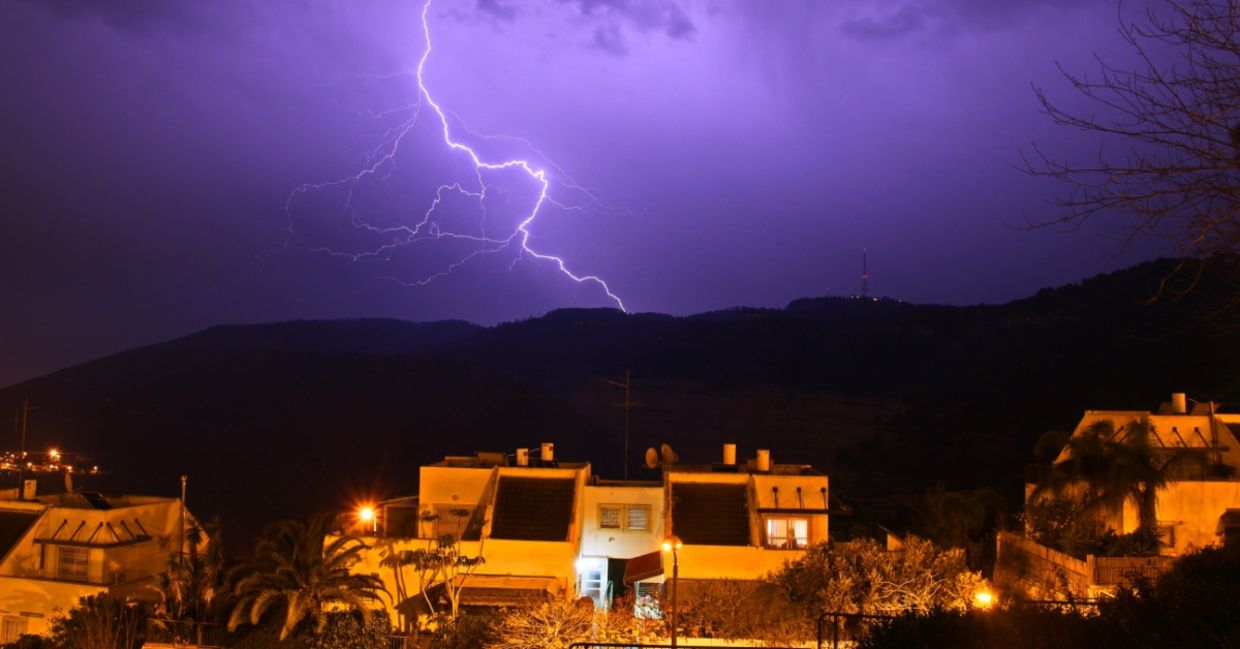
The study announced the development of an AI model that can predict the location and timing of lightning-induced wildfires with 90 percent accuracy, according to Israel21c. The advent of this sort of model could truly be lifesaving, as climate change has heightened the occurrences and dangers of lightning-induced wildfires.
The model out-performed traditional wildfire risk indices. In order to create this highly accurate model the researchers integrated environmental factors, data from weather systems and satellites, reported The Jerusalem Post.
Dr. Oren Glickman, an adjunct assistant professor in Bar Ilan University’s Computer Science Department, and one of the authors of the study, told The Jerusalem Post, “Lightning-ignited wildfires are a global challenge, and our models show they’re likely to intensify with climate change.
“With an improved ability to predict lightning fires: meteorological services, fire departments, and emergency planners can respond earlier and more effectively, potentially saving lives and protecting ecosystems.”
The Importance of Localization
While the first study offered a solution globally, reported Ynet, an additional study from Tel Aviv University that was published in the journal Nature, introduced an AI model aimed at more local solutions. The purpose of this model is to raise the accuracy of wildfire prediction for specific countries and locations.
Basing themselves on the fairly accurate Canadian wildfire index, the researchers recalibrated the index for specific countries by adapting the weather-based risk factors to local conditions. This recalibration raised the accuracy of the risk index to 80 percent.
But the researchers did not stop there. They then developed country-specific machine-learning models which they simplified into transparent decision trees. This method clocked in with an impressive 86 percent accuracy.
The two innovative AI models are a testament to the fact that in order to create solutions one must be cognizant of both the forest and the trees. Lightning-induced wildfires are global issues, but the weather, geography and local parameters of every given location also create very distinct and specific wildfire risks. Both of these aspects must be taken into account when looking to create a robust wildfire prevention system.
And now, thanks to these two AI models, both of these aspects can be accurately predicted and more can be done to keep people, land, and ecosystems safe from devastating wildfires.
YOU MIGHT ALSO LIKE:
Can Technology Help the Rainforests?
Earthquake Detection is Becoming a Reality
Satellite Images Can Forecast When Flooding Will Occur