Goodbye Needles: How Infrared Light May Change Blood Sugar Testing
What if light could improve the lives of millions of people around the world? For people with diabetes, this dream may become a reality in the future.
For those living with diabetes, pricking their fingers to measure blood sugar is often a daily routine. Fortunately, a promising new method may eventually allow patients to track their blood sugar levels using near-infrared light, according to a study in Analytical Chemistry.
It’s all thanks to researchers from MIT, who have developed a band-pass Raman spectroscopy system, which uses light to analyze the chemical signals in the body, to monitor blood glucose levels.
Non-Invasive Identification
Monitoring one’s blood glucose levels is a frequent ritual for people with diabetes around the world, according to The Scientist. The most standard way to check blood sugar levels is by finger stick — pricking one’s finger with a small needle and measuring the glucose levels in a drop of blood. This can be painful and inconvenient.
As Jeon Woong Kang, a researcher and one of the authors of the study, said to MIT News, “for a long time, the finger stick has been the standard method for measuring blood sugar, but nobody wants to prick their finger every day, multiple times a day. Naturally, many diabetic patients are under-testing their blood glucose levels, which can cause serious complications.”
And so, researchers began to look for ways to make monitoring blood sugar levels easier and more comfortable. In 2010, a team from MIT discovered that they could use Raman signals to accurately measure the levels of glucose in blood. However, the method they used was not practical for creating a usable glucose monitor.
Now, however, Kang and the team have discovered a way to directly measure glucose Raman signals from the skin. Usually, tissue puts out so many Raman signals that it is too difficult to discern the tiny glucose molecules from the many other molecules. But, the researchers found that by shining near-infrared light on the skin at a specific angle, they could filter out the unwanted signals and pick out the ones they wanted.
The Size of a Shoebox
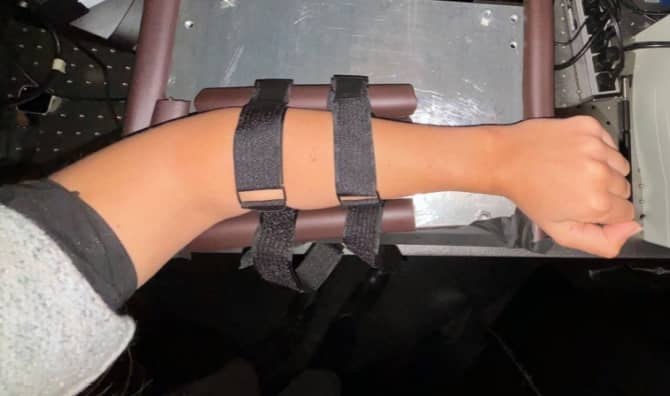
In order to test the device, which is about the size of a shoebox, the researchers had a healthy volunteer rest their arm on top of the device as a beam of near-infrared light shined through it. The measurement took just over half a minute, and researchers took readings every 5 minutes, with the subject drinking two glucose drinks, making it possible for the researchers to see real changes in blood sugar levels. They found that their device was as accurate as two commercially available wearable blood glucose monitors.
Currently, the team has managed to get the device down to the size of a cellphone, and are working to shrink it even farther, to the size of a watch. They are also testing it to make sure that it can work on people with all sorts of skin tones.
Science takes time. What was started in 2010 has since undergone major breakthroughs. But with a lot of patience and careful work the team at MIT may have found a way to one day make a difference in the worlds of millions of people.