How AI Can Help Fight Tuberculosis
Being able to diagnose a disease quickly and efficiently is the holy grail of medicine. The quicker a patient can receive treatment, the better the outcome.
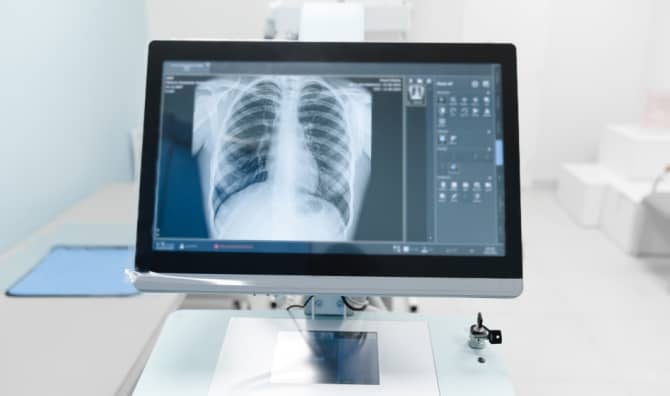
Now, according to NPR, advances in artificial intelligence have made it possible to potentially diagnose tuberculosis via an X-ray and AI algorithm, without the need for a radiologist or waiting a long period of time for lab tests. This is changing the fight against the deadly disease, especially in low-income areas where the need is dire.
Most Deadly Infectious Disease
TB is one of the world’s most deadly infectious diseases. Around 3,500 people die of the disease a day. One of the primary issues in fighting this epidemic is a lack of radiologists available to diagnose the disease that can affect the lungs.
“There are countries in which there are less than five radiologists. It’s like a disaster. And, even if you have some, they will always be in the capitals,” Dr. Lucica Ditiu, executive director of the Stop TB Partnership, an advocacy organization, told NPR.
This is where AI comes in. According to Forbes, the AI software analyzes digital X-rays, with the technology fitted on vans. Meaning, the X-ray machines are mobile and can go wherever they are needed including to underserved communities, refugees, prisoners, and people living in poor rural areas. In addition, the technology can also spot other lung diseases such as pneumonia and whooping cough.
AI is the Future
The AI software is so fast, it can provide a diagnosis in seconds, NPR reported. In rural Mali, for instance, a mother comes in for a screening. The software, without even a doctor on site, almost immediately can see she is at risk of TB based on her X-ray. She runs home to get her five children for screening as well. Three out of five of them are diagnosed as appearing to have TB. They are all set to soon start a six-month course of antibiotics needed to treat the disease.
It is clearer than ever that AI is the future. In fact, Dr. Regina Barzilay, a professor of computer science at MIT, told NPR that developing countries will embrace AI into their medical systems quicker due to unmet needs. As breakthroughs like this one show, AI may save the day when it comes to medical care in these countries.