


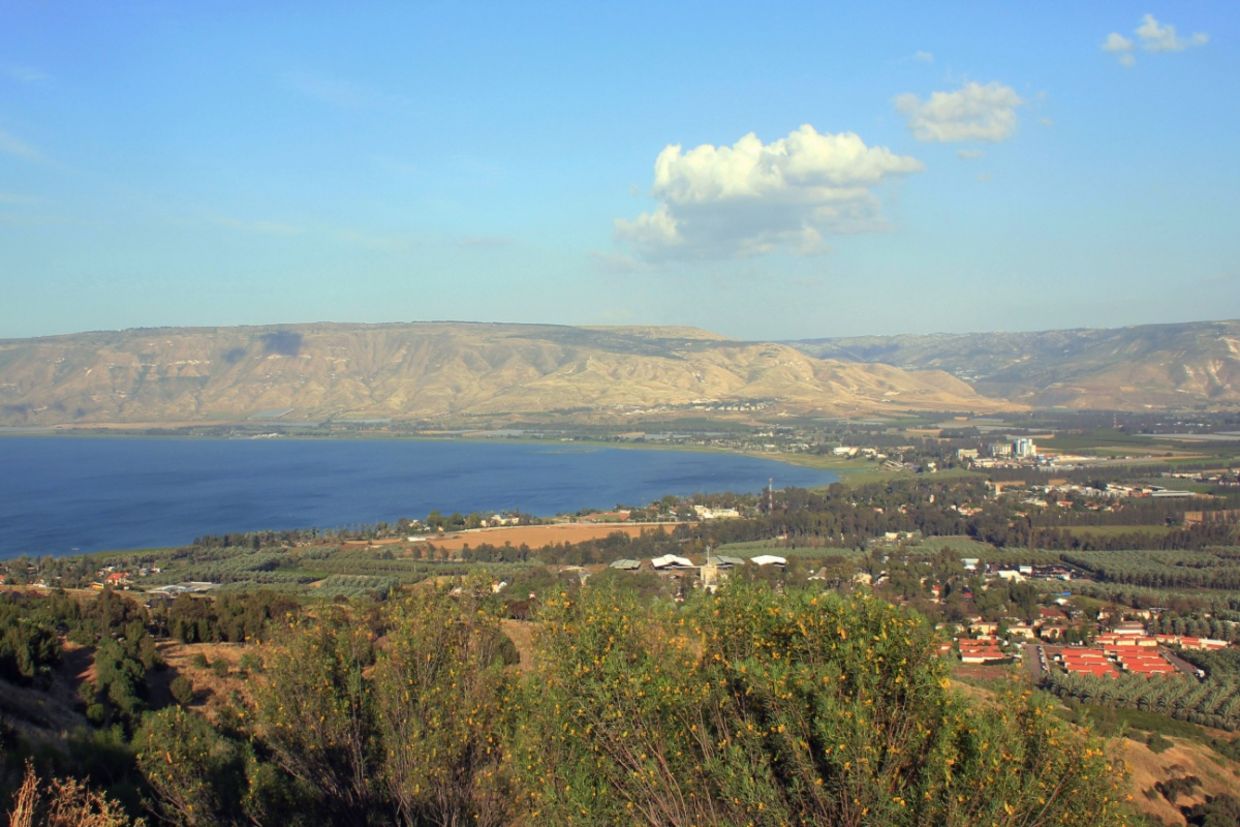
(goga18128 / Shutterstock.com)
Water is precious. It shapes picturesque landscapes including lakes, rivers, and oceans. However, it’s also a vital resource that quenches thirst and sustains all living things.
Like any resource, it also exists in limited quantities. One country is pioneering an innovative method for managing its water supply. In Israel, the Reverse Carrier project aims to refill Israel’s iconic Sea of Galilee with desalinated water pumped in from Mediterranean coastal plants, JNS reported. This project is the first of its kind anywhere on Earth.
An Idea Borne From Necessity
For much of Israel’s history, the Sea of Galilee functioned as the main source of water for homes in the country. After facing droughts, Israel switched to producing much of its water via desalination in 2005. However, even after this shift, in 2013 through 2018, the land experienced a severe drought, sparking concerns over the Sea of Galilee’s water level.
Firas Talhami, head of Israel’s Water Authority’s northern region, explained to Ynet that during the time period, the Sea of Galilee dropped below the lower red line and came close to the black line — the point where extracting water is considered damaging. “That’s when experts proposed reversing the National Water Carrier and channeling desalinated water into the lake. Ultimately, this became the chosen solution,” Talhami said.
The Reverse Carrier Project
The Reverse Carrier project is composed of an intricate and efficient series of pumps, pipes, and reservoirs stretching up to about 90 miles long. The network pumps up to around 1.3 million gallons of water per hour and in the future will move water three times as quickly. In total, the project cost about $300 million.
The project’s name refers to reversing the direction of Israel’s original National Water Carrier, which once carried water from the Sea of Galilee in the north to the country’s southern Negev desert, JNS reported. This system aims to do the opposite – take water from the south to north, and bring it to the Sea of Galilee.
The system is designed so the flow of water can be modulated. In the winter, when the south needs less water for agriculture, Israel can take advantage of the surplus and refill the Sea of Galilee more quickly. Conversely, when it rains, the flow can be slowed to ensure the Sea of Galilee won’t overfill.
“The Reverse Carrier is a project of serious engineering complexity that demonstrates the quality of Israel’s water tech. Thousands of people and years of work went into putting it together,” a Water Authority spokesman told JNS.
Saving the Sea of Galilee
The project aims to prevent the Sea of Galilee from drying up. Although the country doesn’t rely on the lake for day-to-day water needs, the lake still plays an important role in water security and ecology.
Lior Gutman, a spokesman for Israel’s national water carrier, said that the Sea of Galilee is considered a national emergency water reservoir. “Meaning if there’s an earthquake, a continuous state of emergency, or a war, and something happens, God forbid, to the desalination plants, we can and we will use the Sea of Galilee as our main water source for both domestic and agricultural use,” Gutman explained.
Additionally, water politics plays a strategic role in the region. The Sea of Galilee acts as a conduit to transport freshwater to the neighboring country of Jordan.
The Sea of Galilee is a cultural icon and a biblical site that draws tourists from around the world. It’s also a home to plants and animals, and restoring the Zalmon stream, at the end of the route of the project, will allow the native flora and fauna to flourish.
As the world copes with the fallout of climate change and water shortages, this pioneering effort shows the strength of humankind to find innovative solutions amid challenges through willpower. If successful, it could provide a model for managing water shortages across the globe.
YOU MIGHT ALSO LIKE:
How Israel’s Water Tech Leads by Example in a Thirsty World
New Mud-based Process Makes Water Desalination More Efficient
How Fog Harvesting Could Bring Water to the World’s Driest Places