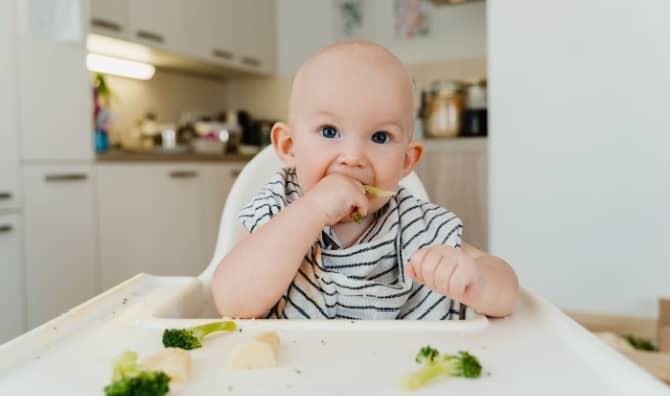
Israeli Study Finds That Vegan Babies Thrive Just as Well as Their Meat-Eating Peers
Parents today have more choices than ever when it comes to how they feed their children. Grocery stores in developed countries are packed with a wide variety of fresh and healthy food. With all these options, more and more people are embracing alternative diets and meat-free lifestyles.
According to New Scientist, in the past questions were raised about how these lifestyles might impact babies’ growth. Official advice generally states that a well-planned vegan diet may offer all the nutrients necessary for good health. However, meeting a child’s growing dietary needs can be challenging, with veganism linked to potential protein and amino acid deficiencies.
A new study, from Ben Gurion University of the Negev, published in JAMA Network Open, offers positive new insights into how plant-based family diets affect growth during early childhood. The study followed the growth trajectories of nearly 1.2 million infants over a decade and found that overall, babies from vegan, vegetarian, and omnivorous families displayed largely similar growth patterns.
Massive Study Sheds Light on Infant Growth
The study’s large sample size made it possible to observe growth trajectories. Although 98.5 percent of the babies came from omnivorous homes, and only 1.2 percent and 0.3 percent from vegetarian and vegan homes, respectively, there were still nearly 18,000 infants on vegetarian or vegan diets — allowing researchers to analyze the groups.
“Because of the massive scale of this study, even a low percentage represents a large enough number of children to be statistically significant and provide reliable evaluations,” Tomer Avnon at Tel Aviv University in Israel, tells New Scientist.
Infant Health Monitoring in Israel
The data was made available by the way Israel’s healthcare system monitors infant wellness, Times of Israel reports. The vast majority of Israeli babies attend visits at wellness centers called Tipat Halav, where vital data regarding their growth and development is tracked.
“This is a huge mass of data that we had access to thanks to the fact that in Israel, nearly 95 percent of babies are brought to a Tipat Halav. It’s an amazing statistic,” Kerem Avital, who led the study, tells Times of Israel.
Measuring Growth and Development
Researchers obtained data, including the weight, height, and head circumference of babies during the first 24 months of life. According to the study, infants from vegan or vegetarian homes had higher odds of being underweight during the first two months of life.
However, by the time these babies were two years old, being underweight was rare and differences between the groups were no longer significant. Overall, the study demonstrates that vegan and vegetarian babies grew similarly to their peers from omnivorous households.
Plant-Based Diets and Healthy Infant Growth
Based on these findings, plant-based dietary patterns could support infant growth. The researchers added that nutritional counseling beginning in pregnancy may help families plan a nutritionally appropriate diet for their babies.
“In the context of developed countries, these findings are highly reassuring,” Avital shares in a press release published by Ben Gurion University of the Negev. “The data suggests that with the proper environment, plant-based diets do not compromise the fundamental physical development of infants,” she adds.
As plant-based eating has become common globally, the study provides reassuring evidence that multiple dietary approaches can support healthy early development. Parents can feed their kids nourishing foods and can choose to steer clear of junk and ultra-processed foods, whether or not their babies eat meat.