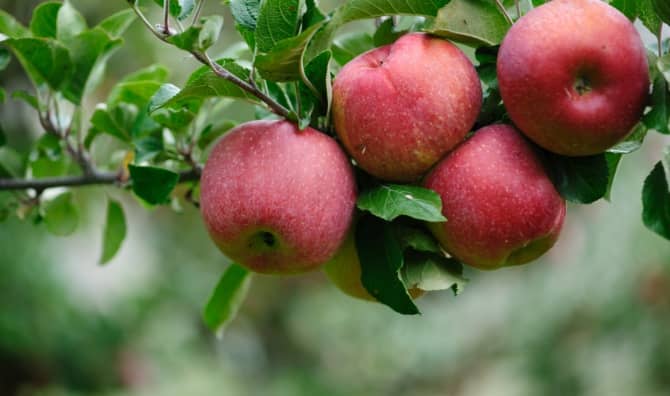
Making Apple Trees More Resilient in the Face of Warming Weather
An apple a day keeps the doctor away. Or, so it is said. Regardless of whether the age-old idiom is literally true, apples are a staple of cuisines and cultures around the world. Now, science is helping these delicious fruits adapt to weather changes.
According to Earth.com climate change has put this beloved fruit in danger. Apple trees require a delicate balance in order to produce both high yields and delicious fruit. Any change in weather patterns can have a disastrous effect on the trees.
Unfortunately, one of the primary results of climate change has been shifting weather, which is a threat to the viability of the apple. However, farmers and researchers from Washington State University are working hard to find ways to make apple trees more resilient.
Most Productive Areas for Growing Apples
Earth.com notes that the most productive areas for apple growing in the United States can be found in Washington State, Michigan, and New York. These states have had climates that are favorable to growing apples
As noted in the study published in IOP Science LTD, when researchers gathered information on five key climate metrics that could harm apple trees — extreme heat during the day, warm nights, reduction in chill periods, the timing of spring frost, and the number of growing degree days — they found that all of these areas, especially Washington, were beginning to face a rise in these phenomena. So what can be done?
Netting, Grafting, and Other Solutions
There are numerous approaches being taken in the fight to save the apple tree. In Michigan, according to AP News, they are going genetic. Efforts are underway to graft a late-blooming, native crab-apple variety, the Malus coronaria, with cultivated varieties in order to create a more frost-resistent apple tree variety. Though the Malus coronaria only blooms a few weeks after typical apple trees, those few weeks could make a huge difference in terms of the viability of the fruit.
“That doesn’t sound like a lot, but almost always that’s enough for the flowers to escape the killing spring frost,” Professor Steve van Nocker, a plant geneticist at Michigan State University, told AP News.
In Washington State, some farmers have started using netting, which protects the trees from getting sunburn in the extreme heat, reported Earth.com. In addition, they also use water-misting systems to cool the trees down in hot weather.
The fight against climate change requires creativity and diversity. There will be no one over-arching solution, but rather many, all suited to the challenges being experienced in a variety of climates and locations. While Washington fights extreme heat, Michigan is in a battle against unexpected late frosts. Both states are working to save their apples, but need to take different roads to get there.