

(New Africa / Shutterstock.com)
Your eyes help us take in the beauty of the world — sunsets, smiles, and stunning scenery. Scientists are learning more about how to keep them healthy and functioning for many years. New breakthroughs in technology and medicine allow for older adults to maintain crystal-clear vision even as their eyes age.
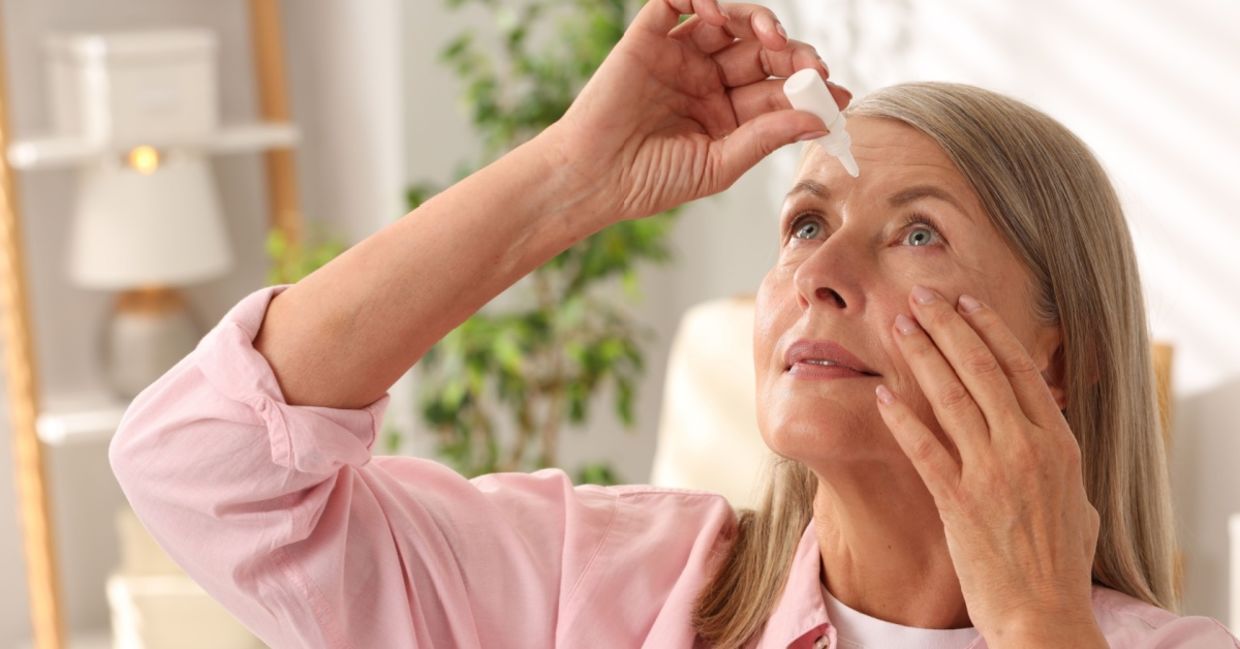
An example of one such technology is Vizz eyedrops, reports Everyday Health. These once-a-day drops can help seniors see up-close text, eliminating the need for surgery or glasses.
Age-Related Vision Changes
Presbyopia, the name for the age-related near-vision blurriness that many people develop over time, affects 28 million Americans.
According to Wired, this condition stems from the eye lens stiffening. As the lens becomes less flexible and elastic, it cannot curve and focus as readily, leading to near-vision deficits and occasionally headaches, fatigue, and other vision issues. These deficits can be corrected by reading glasses, bifocals, or via eye surgery.
Recently, researchers from Argentina have been exploring other means of treating presbyopia. Pilocarpine is an FDA-approved substance that narrows the pupils and helps the ciliary muscle that controls the lens to contract, improving near-vision in individuals with presbyopia.
However, pilocarpine can produce side effects such as redness, tearing, headaches, flashes of light, and difficulty focusing the eye, and in some cases severe side effects, such as retinal tears. But now there is a better way.
A New Type of Eyedrop
According to Everyday Health, reports that a new drug that is also capable of facilitating the iris muscles to contract, just received FDA-approval. This substance, aceclidine, will be sold under the brand name Vizz eyedrops from Lenz Therapeutics.
The Vizz eyedrops work in a similar manner to pilocarpine-derived eyedrops. However, these eyedrops last longer and are more effective at improving close-up vision. Additionally, those who tried the product reported very few side effects, most of them minor and temporary.The eyedrops begin working as quickly as 30 minutes after application, and their effect lasts up to 10 hours.
Using the Eyedrops
Eyedrops are a great alternative for those who don’t want to opt for reading glasses, Daniel Diamond, a professor of optometric science tells Everyday Health. “Originally, the only treatment for age-related difficulty reading was eyeglasses or holding the book further away from your face. Eye drops to help with presbyopia have come into the mainstream in the past few years,” he explains.
“I see tons of patients every week in their early forties who are starting to have difficulty with reading, and the vast majority do very well with reading glasses. But there definitely are patients who never had to wear glasses before, or do not like how glasses look or feel, and for these patients the drops are going to be a game changer.”
Although the drops are FDA-approved with prescriptions, users should know that for some, their effect may last less than 10 hours. Additionally, they can affect night vision, so those who use eyedrops to treat presbyopia should be careful when driving at night.
People’s eyes are their portal to the world. Now, new medical developments are making it possible to keep these portals open and functioning even as they age. These eyedrops could improve the vision of millions of Americans, eliminating the need for reading glasses.
YOU MIGHT ALSO LIKE:
Study Provides Hope in Restoring Vision
These Smart Glasses May One Day Eliminate the Need for Bifocals
New Bionic Eye May Restore Sight to Visually Impaired People