New Research Highlights an Unexpected Benefit of Green Roofs
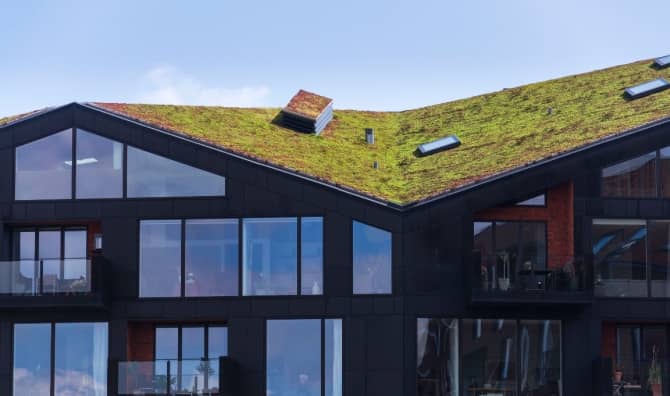
Today, green roofs are not just eco-friendly architectural marvels brightening up built-up areas and helping create cleaner, healthier cities. A new study reveals that growing plants on roofs can serve as an effective way to trap an estimated 97.5 percent of microplastics from rainwater, reports Sustainable RDN.
The study authors underline the important role played by green roofs in trapping microplastic particles, seeing them as a strategic opportunity for the initial interception of atmospheric pollutants. They also say that their findings offer valuable insights and data for developing future microplastic pollution management strategies.
The Value of Green Roofs
According to the World Green Infrastructure Network, green roofs, also known as living roofs and roofscapes, are vegetated roofing systems that are functionally integrated into a roof area, with designs that vary by site depending on factors such as climate, slope, and intended use. Designs can vary from manicured lawns to natural plant communities.
While their use harks back to 10th century BC Persia, and the famed Hanging Gardens of Babylon, they have appeared in history since. They are seen, for instance, in the Scandinavian “sod” roofs built since 1000 AD to insulate buildings. But it was really in Germany in the 1980s that an R&D-led green roof renaissance occurred with vertical gardens a part of this trend. This approach is now referred to as “Building Integrated Vegetation” systems.
Green roofs offer physical as well as mental health benefits to people living and working nearby, and an enhanced quality of life. Benefits include thermal regulation, enhanced urban biodiversity, the ability to calm the flow of stormwater and reduce flood risk, sound insulation capabilities, and offer recreational and food production spaces.
According to Phys Org News, prior research already showed that growing plants on roofs can trim heating and cooling bills, as well as clearing pollution from the surrounding air.
A Promising New Role as Microplastic Interceptors
The authors of the new study, entitled “Green roofs act as the first barrier to intercept microplastics from the urban atmosphere” hail from Tongji University in Shanghai, China.
Until now, they explain, the ability of green roofs to intercept and retain microplastics, small bits of material less than 5mm in size that are formed from the breakdown of everyday plastic products, had remained unclear, which is why the research findings are so significant. As Sustainable RDN points out, microplastics are found in soil, air, water, and even our bodies and our food, and it is becoming increasingly clear that they pose risks to human health as well as to the environment and wildlife.
Microplastics have become pervasive polluters across aquatic, terrestrial and atmospheric ecosystems. To date, most efforts to capture them have focused on filtering them out of surface runoff in places such as constructed wetlands, but the findings of this new research show that green roofs actually remove close to 100 percent of deposited microplastics.
To test out their hypothesis, the researchers built a simulated roof environment in their lab, where in a thin layer of fresh soil, they planted two plant types commonly found on rooftops in the city of Shanghai. They also introduced microplastic particles into the air above the plants at local levels, and added simulated rains, measuring microplastic levels on the plants in the earth.
They found that the plants were successful at pulling the microplastics from the rain, and by extension, from the air above them. Most particles (66-92 percent) were trapped in the soil layer, with some retained by the vegetation.
The research team observed that higher rainfall intensities slightly raised interception efficiency due to factors such as enhanced moisture content, and that fibers were more challenging to capture than fragments.
The researchers are careful to point out that their estimates are based on controlled experimental conditions and will not universally represent the efficiency of all green roofs, which can differ according to climate and seasonal weather patterns.
They also note that their discovery opens up as many questions as it answers. In particular, the long-term operation of green roofs may lead to the aging and degradation of plastic components, potentially generating new microplastics. Indeed, Anthropocene Magazine emphasizes that green roofs are not likely to be a “set it and forget it” fix for microplastics, but that the likelihood that green roof soil could become saturated with microplastics over time will need to be addressed.
The researchers call for further, large-scale field investigations to refine their calculations, and ensure a clearer picture of the variability of green roof performance in the real world.
Nevertheless, they are enthusiastic that the expansion and implementation of green roofs on regional and city scales have significant potential to trim atmospheric microplastic pollution cost-effectively, and to contribute importance and value in sustainable development.
Their results, the researchers maintain, “show that green roofs can play a valuable role in reducing urban microplastic pollution, and offer practical insights for designing future stormwater and air-quality management strategies.”