

(schankz / Shutterstock.com)
At a time when the zeitgeist is turning away from the idea of performing animals, however endearing they seem at a show, more commenters are focusing on the rehabilitated lives of formally-captive wild animal performers.
Aware of the need to shine a spotlight on rewilded animals, Green Matters paints a heartwarming picture of the halcyon days experienced by former performing dolphins Johnny, Rocky, and Rambo, following the dolphins’ return to the freedom of the open seas.
Back to Nature
Green Matters celebrates how, after years of entertaining humans, and a three-year period of adjustment in a dolphin sanctuary, the wild-caught dolphin trio, Johnny, Rocky, and Rambo, have been celebrating their freedom, cavorting in their natural habits. This is despite the fact that sadly, the eldest of the three, Johnny, passed away of natural causes shortly after his release into the wild.
It is only in their natural ocean environment that dolphins can fully express themselves, build bonds with other dolphins, and explore the vast ocean, enjoying themselves, and living free from fear. Rocky has been monitored swimming long distances, while Rambo has preferred to remain in the calmer bay near the release site. Most recently, Rocky and Rambo, both fitted with GPS trackers, have been seen returning to the sanctuary that helped them heal, though they are free to come and go as they please.
Life as Captive Performing Mammals and Then Rehabilitation
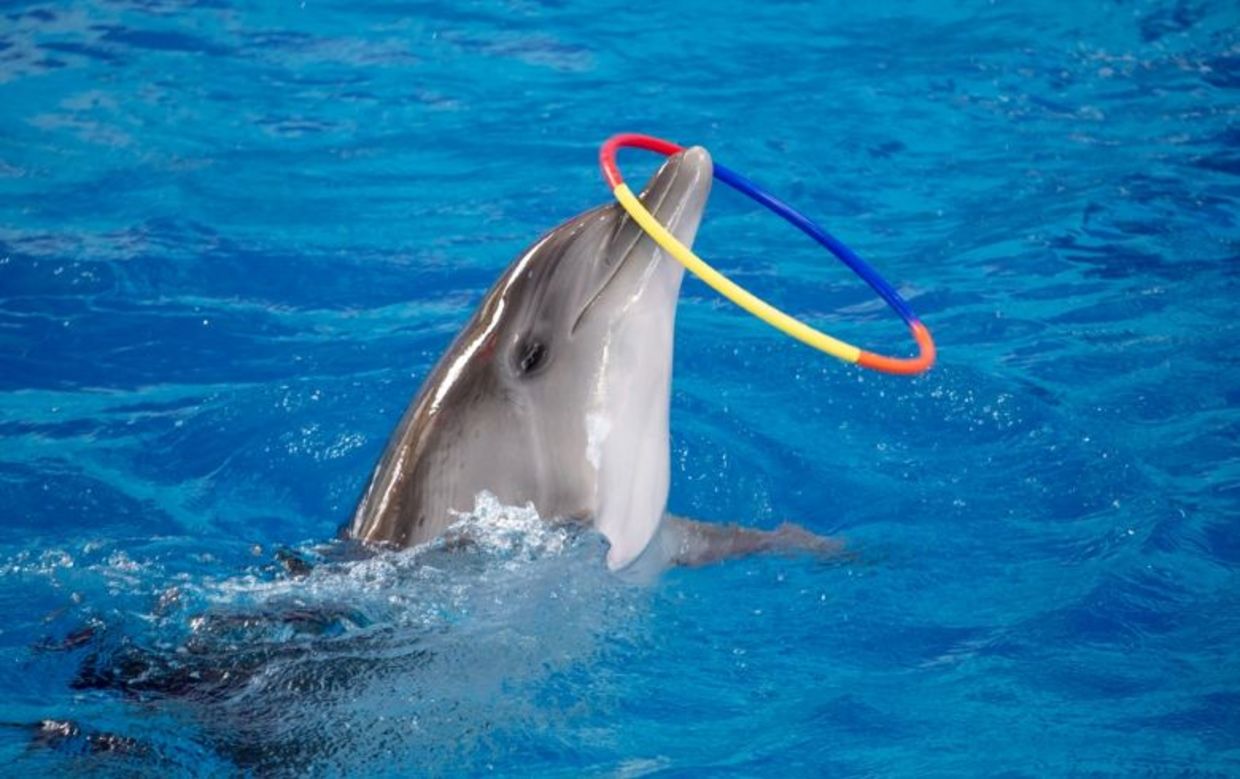
Life for the dolphin trio as captive performing animals was bleak. They were kept in small tanks, essentially tiny chlorinated swimming pools, first at a mobile circus and later even a hotel. The gentle mammals were constantly kept hungry so that they would obey orders when they needed to perform tricks for crowds of visitors.
The Dodo documents how the mammals were also deprived of socialization and open water, spending 90 percent of their time on the surface of the water when wild dolphins spend this significant portion of time underwater, and forced to perform tricks daily.
This treatment left the dolphins with physical scars. All three were found to be underweight and malnourished.
Johnny, the eldest dolphin, for instance, had skin damage, and teeth so worn down that they had receded below his gums, although medics were able to treat him with a series of dental crowns.
Emotionally, they suffered from anxiety and depression, as Species Unite details.
It was only after another dolphin, Gombloh, was found dead in the pool of the resort hotel where all three were kept, that a legal ruling ordered the relocation of the resort’s performing animals.
With the approval of the Indonesian Ministry of the Environment and Forestry, the dolphin trio was rescued by local nonprofit, Dolphin Project in partnership with the Indonesian government, and taken to the Bali-based Umah Lumba Rehabilitation, Release and Retirement Center. This center, according to state broadcasting company Voice of Indonesia (VOI), is the first permanent dolphin rehabilitation, release and retirement facility, and the only one for dolphins previously involved in a circus or dolphin show.
At this rehabilitation center, they were treated for their health conditions in a healing program that took in being placed in a large, netted pen in a secluded bay to safely adjust to the natural sounds, sights and rhythms of the ocean.
Over a three-year period, these cherished dolphins regained their weight, strength and color, and relearned how to hunt for fish, critical to survival in the wild. After three years had passed, when the door to the enclosure was left open, after returning briefly as if to thank the staff, all three initially chose to swim into the wild.
Significantly, alternatives to performing dolphins are now available. Species Unite covers how Edge Innovations has created a robotic dolphin that mimics the look and movement of real-life dolphins and can still bring pleasure to audiences.