

(Sergey Uryadnikov / Shutterstock.com)
A dog jumps up to lick their owner’s face, tail wagging; a cat zooms through the house chasing a little ball; cows frolic as they are released into a field of grass — most pet owners and animal lovers will attest to the fact that they’ve witnessed their nonhuman companions expressing joy.
Now, according to Vice, animal researchers from universities in the United States have come together for the “joy-o-meter” project. It’s dedicated to the prospect of coming up with a system to analyze joy in animals.
Turning the Tide Toward Positivity
The project mentioned above came to the attention of the public in an essay in Science News. In it, the author lays out the history of the study of animal emotions and the ways in which researchers try to quantify them.
For a long time, most animal research focused on pain — because responses to pain and other negative events could be analyzed by behavior and physiological markers. Now, however, the tide has turned, and more and more researchers are studying and trying to quantify if and how animals experience joy.
Measuring Joy Among Animals
One of the first and primary issues for the joy-o-meter project is the fact that joy is hard to define. So, the researchers created a clear definition to serve their purposes: joy as a brief yet powerful and positive emotion sparked by some event, such as coming across a favorite food or meeting a friend.
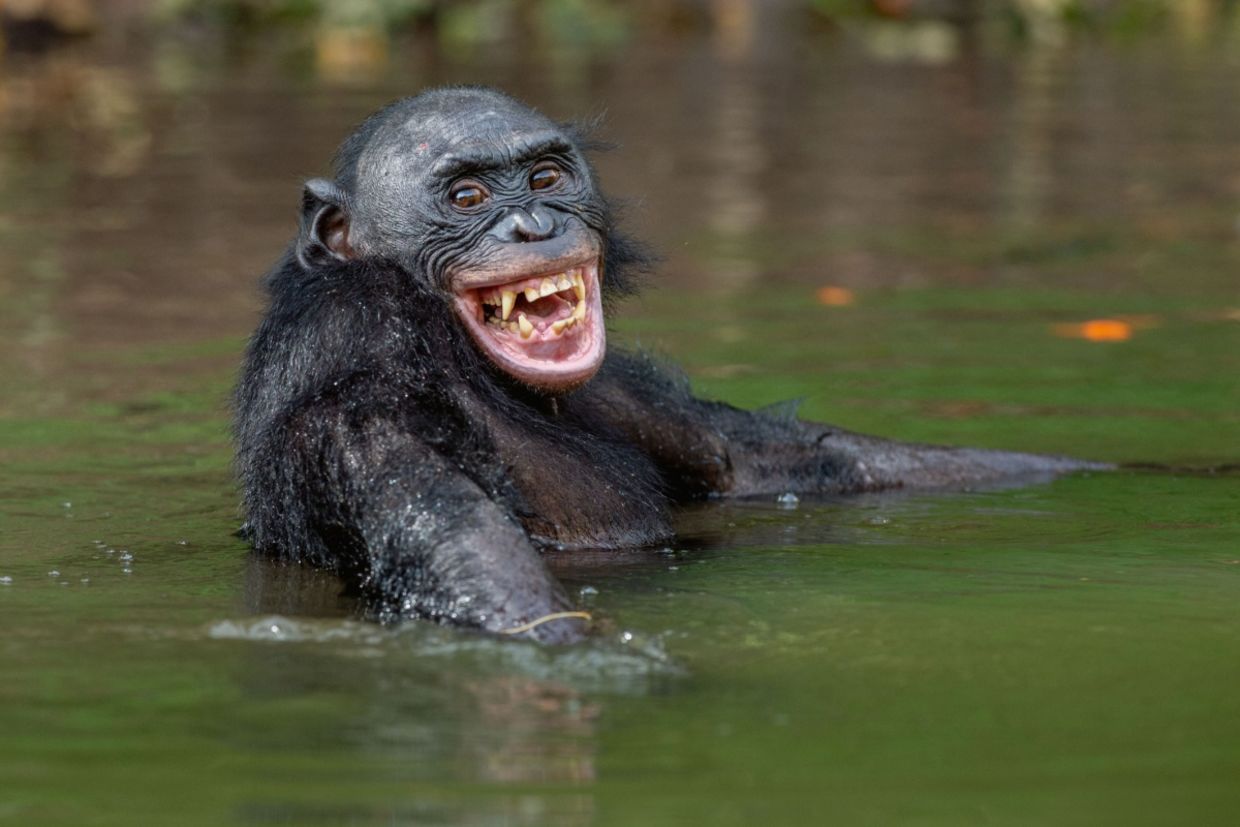
The first animals to be studied were humans’ closest relatives, bonobos and chimps. It was discovered that chimps make a panting noise sort of like laughter that’s unvoiced when they play or want to communicate positive intent or de-escalate a situation. As for bonobos, another researcher found that captive bonobos were more likely to have an improved mood after being played audio of baby bonobo laughter.
But the joy-o-meter project is not limited to primates. There are other researchers studying parrots in New Zealand who seem to love making snowballs and sliding down roofs in sunny, snowy weather. These birds, keas, make a warbling sound when happy that is as contagious as giggles. Likewise, researchers have found that dolphins make a sort of victory squeal when they catch a fish, and preliminary data suggests that these squeals have a social function.
Looking Toward the Future of Studying Joy
Though the joy-o-meter project is certainly worthy, there are doubts about whether joy can be quantified across species, or even beyond the individual animal, according to a blog on Psychology Today. Like people, some animals, even within species, are happy with mild moments of joy, while others appreciate wilder forms of joy, so quantifying that joy does not provide a lot of overarching information.
Still, the very fact that science now considers animal joy as a serious area of study is a step forward. There is a lot to be gained in a fuller understanding of the animal kingdom in all its complexity — both the pain and the joy.
YOU MIGHT ALSO LIKE:
Abandoned Pet Lions Begin New Lives!
Conservationist Jane Goodall Transformed the Study of Chimpanzees
Penguin Becomes a ‘Guide Bird’ For His Best Friend