


(sweet_tomato / Shutterstock.com)
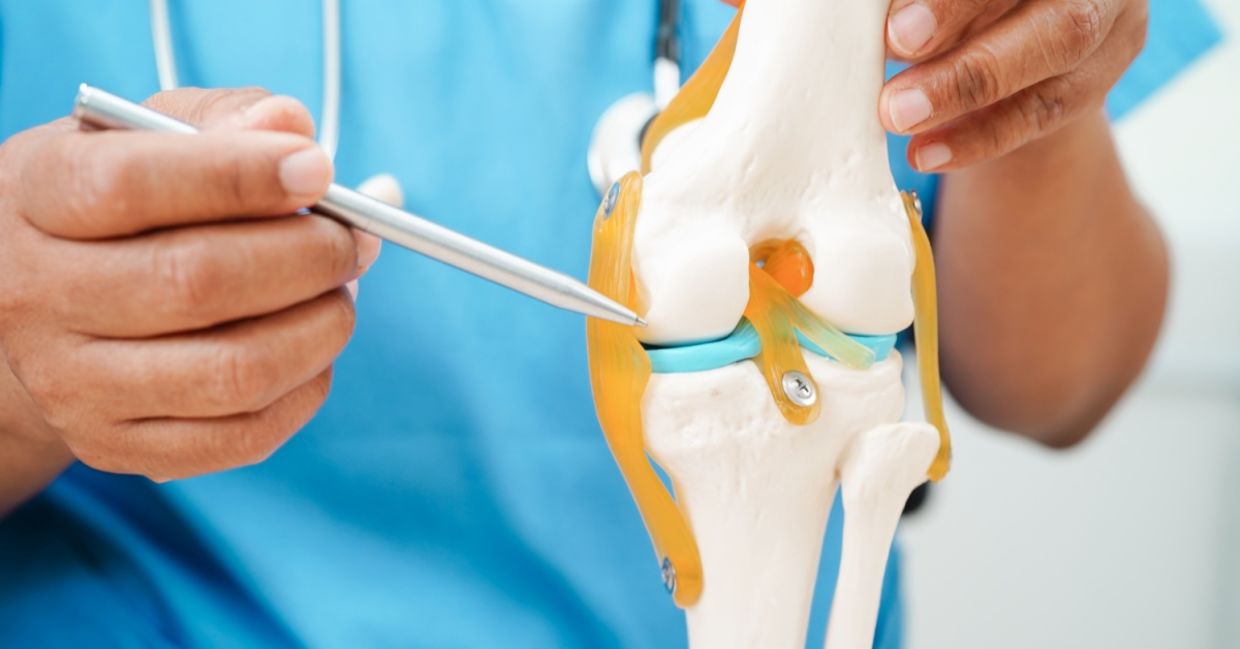
Your knees are the largest joints in your body. They are also the most important joints in terms of movement. Your knees allow you to walk and run, and they play a particularly important role in terms of your mobility and overall quality of life.
Knees can also be easily injured and that – as well as aging – could lead to osteoarthritis, a disease that leads to a loss of cartilage, according to Stanford Medicine News. Osteoarthritis occurs when a joint is stressed and the body releases pro-inflammatory molecules that break down cartilage. There is no cure and current treatment includes pain management and joint replacements. That’s why a Stanford Medicine-led study set out to find a treatment to reverse joint cartilage loss.
About the Study
The researchers tested mice and human tissue collected from joint replacement surgeries by injecting a gerozyme inhibitor in the affected areas. During the study, the injectable treatment not only rebuilt cartilage but also stopped osteoarthritis from developing due to knee injuries. The human tissue also responded to the treatment.
The study, which was published in November 2025 in Science found that that blocking the protein called 15-PGDH that is involved in aging could be a gamechanger for people suffering from osteoarthritis because instead of targeting symptoms, the treatment addresses the causes of the disease, according to SciTech Daily.
“This is a new way of regenerating adult tissue, and it has significant clinical promise for treating arthritis due to aging or injury,” Helen Blau, PhD, professor of microbiology and immunology and a senior author of the study, told SciTech Daily. “We were looking for stem cells, but they are clearly not involved. It’s very exciting.”
Addressing Knee Injuries
The new treatment didn’t just help mice who developed osteoarthritis due to aging, it also helped ones with injuries like ACL tears; a frequent occurrence for athletes. While ACL tears can be surgically repaired over half of the people develop osteoarthritis in the injured joint.
The researchers found that treating the animals with the injury with injections of the gerozyme inhibitor reduced the chance of developing arthritis. While the ones who were not treated developed osteoarthritis in just four weeks.
“The mechanism is quite striking and really shifted our perspective about how tissue regeneration can occur,” Nidhi Bhutani, PhD, associate professor of orthopedic surgery and a senior author of the study said.
“It’s clear that a large pool of already existing cells in cartilage is changing their gene expression patterns. And by targeting these cells for regeneration, we may have an opportunity to have a bigger overall impact clinically.” That would be welcome news for the people who suffer from knee cartilage loss.
YOU MIGHT ALSO LIKE:
Hydrogel May Soon Replace Knee Cartilage
5 Amazing Benefits of Backward Walking
This Invention Could Be a Lifesaver for People With Arthritis