

(PixelBiss / Shutterstock.com)
Though seemingly banal, bus stops are an essential part of any urban ecosystem. Ostensibly they simply provide shelter for people waiting for the bus, but they can also be places for people to find information, socialize, and sometimes, even to experience art.
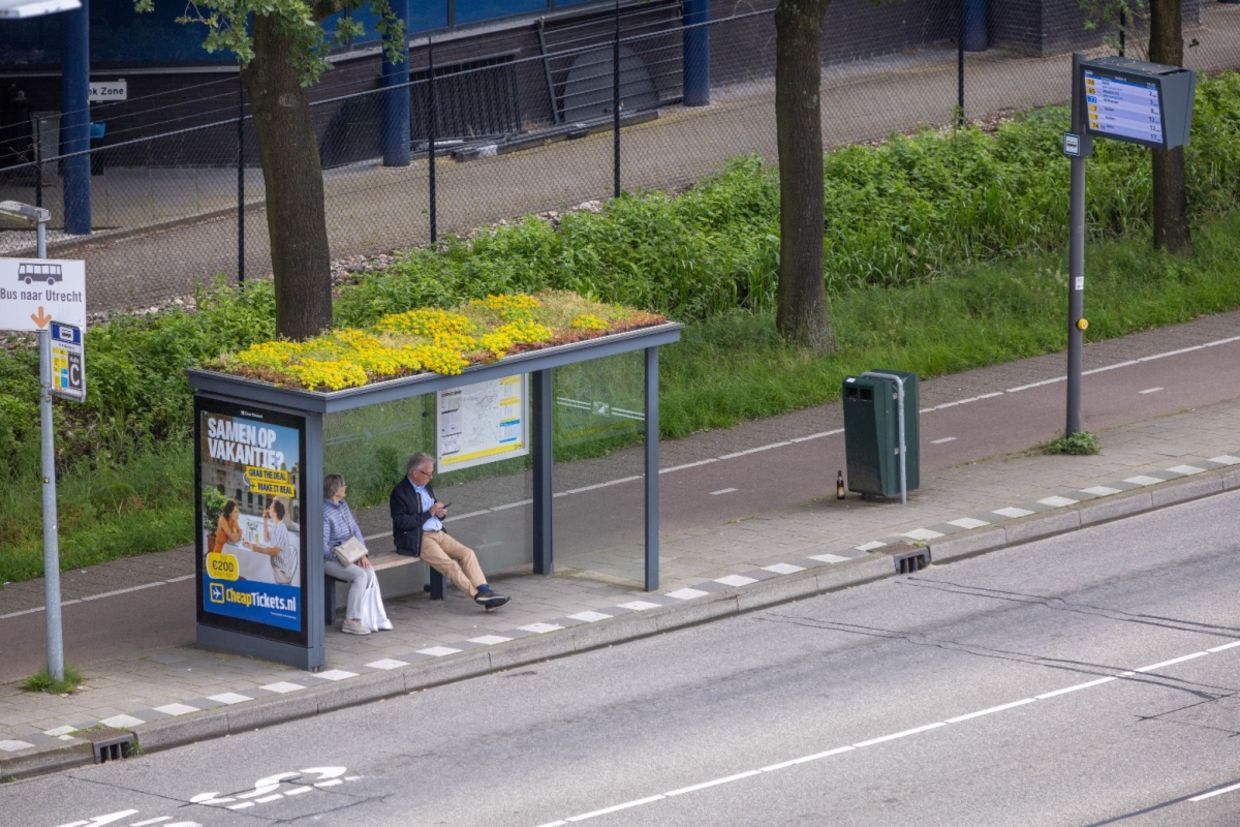
Now, however, cities around the world are discovering another use for bus stops. According to The Washington Post, they are taking these structures — that are essentially nothing more than three walls and a roof — and turning them into green havens for wildlife.
Not Just the Netherlands
Adding green roofs to bus stops was once simply a small initiative in the Netherlands. Now, however, the environmentally friendly innovation has spread throughout Europe, North America, and Asia.
As eCity reports, the main elements of a green bus stop include a vegetated roof that absorbs rainwater, improves air quality, and serves as an urban meadow for local insects. Other options for greening bus stops include vertical gardens along the walls, and planting trees to provide shade nearby.
As for the roofs, the Washington Post notes that green roofs require a structure that is strong enough to support the weight of the soil, water, and plants. After that, all that is needed is a root barrier to keep the plant roots from growing down into the structure itself; a drainage system that collects rainwater and releases it at a slow rate; lightweight soil that can nurture the plants, retain water, but won’t get too heavy for the bus stop roof; and finally, a collection of greenery and plants.
Biodiversity and Cooling
So, why are so many cities installing green bus stops? For one, they keep things cool, and not only because they provide commuters with shelter from the sun. Green roofs in general have been shown to offset the urban heat island effect, and can lower the surrounding air temperature by 20 degrees Fahrenheit.
Likewise, green bus stops, especially those planted with biodiverse, native plants, are a boon to local wildlife. For instance, in Utrecht, the green bus stops have been designed to create a belt of bee lines that provide the pollinators with consistent food. And in fact, the national bee census has been showing signs that the bee population in the city is growing.
In 2022, researchers from the Society for the Protection of Underground Networks (SPUN), an organization devoted to the study and protection of the world’s mycorrhizae, a type of fungi, discovered that Utrecht’s network of green bus stop roofs were bursting with fungal biodiversity.
This is vital, according to bioGraphic, because mycorrhizal fungi and plants have evolved to live in a mutually beneficial arrangement. The fungi are sustained by the sugars created by photosynthesis, and at the same time create an underground web that helps trap nutrients for the plant partners.
“There’s something just so intimate about sitting underneath a biodiversity hot spot [while] waiting to go to work,” Justin Steward, a data scientist at SPUN, said of Utrecht’s fungi-rich bus stop gardens. Across the Atlantic, in Boston, green bus stops have been visited by more than just bees. “We’ve seen butterflies, bees, birds, even squirrels,” Zoe Davis, the city’s senior climate resilience project manager, told The Washington Post.
A good public transportation system is the heart of every city, and buses are an essential part of that system. The spread of green bus stops shows that urban infrastructure can have many uses. They can also serve as a home and source of food to bees, birds, and more, enriching the urban environment and making the city a kinder place for people, animals, and plants alike.
YOU MIGHT ALSO LIKE:
Dutch City Turns Bus Stops into Bee Stops
Bus Stop Gardens Bring Bees Back to Cities
A New Route to Beating the Summer Urban Heat in Madrid