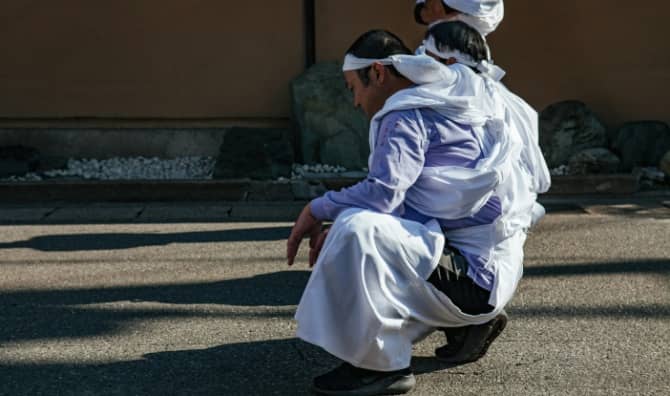
An Ancient Samurai Practice Could Keep Seniors Independent
Ancient Japanese samurai were known for being formidable, elite warriors. Samurai were disciplined, loyal, and capable, and played a significant role in influencing Japanese culture.
Most Japanese today are not dueling with katanas or guarding lords and nobles like the ancient samurai did. However, new research from Tohoku University in Japan, published in the Tohoku Journal of Experimental Medicine, suggests that adopting other samurai practices may improve the lives of modern-day seniors.
Rei-ho: The Ancient Samurai Art of Bowing
The Times of India explains that traditional samurais practiced bowing techniques both to demonstrate discipline and to show respect. Rei-ho is an exercise routine based on adapting ancient Japanese bowing poses.
The slow and controlled Rei-ho poses require engaged core muscles, balance, and leg strength. Thus integrating this routine into one’s weekly workouts may help build stability, improve posture, and strengthen the core and lower limb muscles. Rei-ho also encourages mindfulness, which could offer potential mental health benefits.
Building Knee Strength
The Tohoku University study demonstrated the benefits of practicing Rei-ho according to Science Alert . Study participants were split into two groups. One group spent three months doing Rei-ho squats and other exercises for at least five minutes a day, four days a week.
After three months, the researchers found that the group that integrated the samurai-inspired exercise routine into their weekly workouts gained 25.9 percent in knee extension strength. By contrast, the control group showed little-to-no improvement in knee strength.
Rei-ho for Senior Citizens
Although the study participants were younger adults, researchers extrapolated from the results that practicing Rei-ho, and thus building knee extension strength, may help seniors avoid dangerous and debilitating falls.
Exercise physiologist Ayaka Ogasawara told Science Alert, about the importance of the muscles in the knees, explaining that, “Knee extension strength – the force used to straighten knees – is a key measure of mobility and daily functioning.”
Rei-ho is an ideal exercise for older adults because it is practiced in a slow and controlled manner and therefore is less likely to risk injury or cause high blood pressure unlike other knee-strengthening exercises.
Getting Started Safely With Rei-ho
The Times of India offers guidelines for seniors looking to get started with Rei-ho exercises. It is important to speak to a doctor before adopting a new workout routine if you have any pre-existing conditions.
Additionally, seniors should start slowly and keep a chair or other support nearby in case they need it. To build knee strength, make sure to practice Rei-ho daily or regularly, even if only for ten minutes at a time.
Falls are a leading cause of accidental-injury deaths and can have a devastating effect on seniors. When not fatal, small slip could lead to a prolonged hospital stay, loss of independence, or extended disability. This ancient Samurai workout may be able to help seniors build the knee strength required to hold onto their health, mobility, and independence.