Israel’s ‘Peptide Detective’ Makes Top 10 Scientists’ Ranking
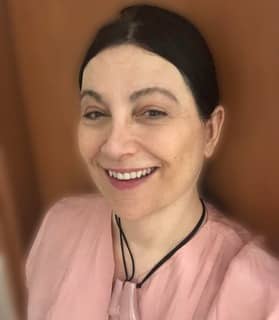
In December 2025, respected scientific journal, Nature, named the 10 people it considers to have shaped science globally during the year, and talented Israeli systems biologist, Professor Yifat Merbl, was chosen to be on this prestigious list. She was recognized for uncovering what Nature terms “an entirely new layer” of the human immune system. This is hidden within proteins that cells normally break down and recycle, as Ynet Global reports.
This list places Merbl on a par with other global figures honored for major scientific breakthroughs or for drawing attention to crucial issues throughout the year.
The new list, compiled by Nature’s editors, acknowledges scientists examining the farthest reaches of the Universe, as well as the deepest ocean depths. But it also takes in a Pandemic negotiator, a neurologist leading clinical efforts to treat the devastating brain disease, Huntington’s, a scientist breeding billions of insects to fight mosquito-borne diseases in Brazil, and a baby who received the first hyper-personalized CRISPR gene-editing therapy at the age of just six months, among others.
Spotlighting Merbl’s ‘Peptide Detective Work’…
Brilliant scientist, Merbl, is hailed as a “peptide detective” due to her work uncovering a previously unknown layer of peoples’ immune systems hidden inside the little pieces that proteins are broken down into.
Together with her research team at Israel’s Weizmann Institute of Science in Rehovot, Merbl discovered that so called ‘proteasomes’, functioning as a cell’s “garbage cans” and usually used for recycling proteins, can also cut up proteins into fragments acting as natural antimicrobial fragments to tackle infections. Merbl’s team, which included 11 female scientists, and local researchers, as well as scientists from India, China, Italy, Russia, and Austria, discovered this by identifying the peptides created by proteasomes in various cells. The researchers then compared the sequences of these peptides with others with known functions using public databases.
They found that many matched ones known to wipe out bacteria, which they do by piercing their membranes, for instance. The team also identified another 1,000 fragments which sequences that, according to an algorithm, make them likely to be antimicrobial, so that cells use them as a first line of defence against bacteria.
Further, when the team used computer models to dissect all human proteins into all possible peptide fragments, they identified over 270,000 possible antimicrobials. In essence, Merbl’s researchers had uncovered a likely new immune defence mechanism.
This is a significant finding as it offers promise for developing new, safer and more personalized antimicrobial therapies, or as ZME Science puts it, this is a discovery that opens up a massive new frontier for developing antibiotics and better understanding how our bodies fight infection.
As The Jerusalem Post details, this discovery could advance personalized medicine because the new tools can measure protein breakdown in individual cells and create tailored immune treatments for serious diseases such as cancer.
“This was literally where you have the goosebumps, because you realize that you may have found something fundamental,” Merbl shared with Nature.
Ruslan Medzhitov, an immunologist at the Yale School of Medicine in Connecticut, explains why scientists have welcomed Merbl’s discovery: “There’s something that we thought is so familiar and so well understood, and then boom — something totally unexpected and exciting comes out of it.” He outlines that scientists are especially thrilled, because the peptides hail from “run of the mill” cellular proteins, rather than ones specializing in immune defence. This suggests that the lab may have identified an untapped resource of potential “natural antimicrobial agents”, which is valuable due to the global rise of antibiotic resistance.
…And Her Resilience
Several media outlets have noted that Merbl’s inclusion on the acclaimed list was also due to her personal perseverance.
Her Weizmann Institute laboratory was destroyed in June 2025 by an Iranian ballistic missile strike that, as The Times of Israel reports, destroyed a total 45 labs, though thankfully, no one perished.
Yet despite the total destruction of the premises and her equipment, Merbl and her research team worked to salvage samples and proceed with their research from a new location.
Furthermore, Merbl herself suffers from attention-deficit hyperactivity disorder (ADHD), which made completing school especially challenging. While she loved biology and computer science as a child, she struggled to attend school, and failed to graduate from high school with her peers. Over the years, however, she has understood that the workings of her brain are an advantage rather than a flaw, as they give her a refreshingly different perspective.