


(Ndaru Anuradha / Shutterstock.com)
Rooted in centuries of spiritual practice, Tibetan Buddhism offers rich traditional teachings that guide the mind and heart toward awakening and compassion. From the towering monasteries of the Himalayas to the quiet corners of daily life, Tibetan Buddhist practices offer tools to calm the mind, awaken presence, and connect with something greater.
Tibetan monks carry the heart of this tradition, guiding both themselves and their communities on the path of awareness and devotion. The BBC reports that through daily rituals, chanting, and meditation, they offer a living example of spiritual discipline. By exploring these simple yet profound techniques, you can honor the essence of Tibetan Buddhist wisdom and create your own moments of reflection and inner harmony.
Butter Lamp Offerings
Lamp lighting holds deep meaning in Tibetan Buddhist ritual life. According to Atlas Obscura, the golden glow of butter lamps serves as a point of focus for meditation, drawing the mind toward stillness and clarity. The flame represents the path to enlightenment, a reminder that wisdom dispels darkness. Yet its gentle flicker also mirrors impermanence. So, why the name? Rather than wax or electricity, Tibetan monks use yak butter to fuel these chalice-shaped votives.
You don’t need a Himalayan monastery to honor this ritual. At home, lamp lighting can become a quiet daily practice. Choose a small candle or oil lamp and place it somewhere meaningful. Before lighting it, pause. As the flame steadies, let your breath steady with it. Gaze softly at the light for a few moments, allowing thoughts to settle. Imagine the flame illuminating clarity, presence, warmth, and wisdom in your own life.
Prayer Flags
Across Himalayan rooftops and mountain passes, colorful cloth banners flutter gently in the wind. According to HowStuffWorks, Tibetan monks traditionally hang prayer flags printed with mantras, symbols, and blessings on high places so the wind can carry their prayers into the world. Rooted in Tibetan Buddhism, the five colors (blue, white, red, green, and yellow) represent the elements of sky, air, fire, water, and earth, reflecting harmony between humanity and nature.
You can create a small, sacred area on a balcony, in a garden, or even near a sunny window where prayer flags can hang freely and safely. Choose a set of five colors to honor the elements, and if possible, select flags printed with meaningful words, symbols, or mantras. Before hanging them, take a quiet moment to set an intention, such as sending compassion, gratitude, or protection into the world. As the flags sway in the breeze, imagine your prayers and intentions being carried outward, joining the timeless tradition of spreading goodwill and mindful energy through movement and air.
Ritual Sound Healing
For over 2,000 years, Tibetan monks have used sound to generate therapeutic frequencies that promote deep meditative states, according to Oprah Daily. Sound in meditation provides a focal point to calm the mind and deepen concentration. Harmonic chants and instruments like gongs, chimes, tuning forks, and singing bowls invite relaxation and awareness.
You can create your own healing ritual by playing recorded frequencies, listening to singing bowls, or simply humming with intention. Close your eyes, breathe slowly, and allow the sound to surround you. Let it move through your body without forcing anything. In this simple act of listening, sound becomes a sacred practice, grounding you, restoring your energy, and reconnecting you to your inner calm.
Sky Gazing
Dzogchen, or Great Perfection, is a meditative tradition in Tibetan Buddhism that achieves spiritual awakening through simple, direct practices. According to the Lion’s Roar resource, sky-gazing meditation, a key aspect of this approach, involves cultivating awareness of the mind’s vast, expansive nature by meditating on the open sky.
Try sky-gazing meditation at home by finding a quiet, open space underneath the stars. Sit comfortably, allowing your body to relax, and soften your gaze. Rather than focusing on specific thoughts, simply notice them as they arise and dissolve, returning your attention to the vastness above. Even a few minutes can help you sense the limitless quality of your mind and strengthen your connection to something greater.
Mala Bead Practice
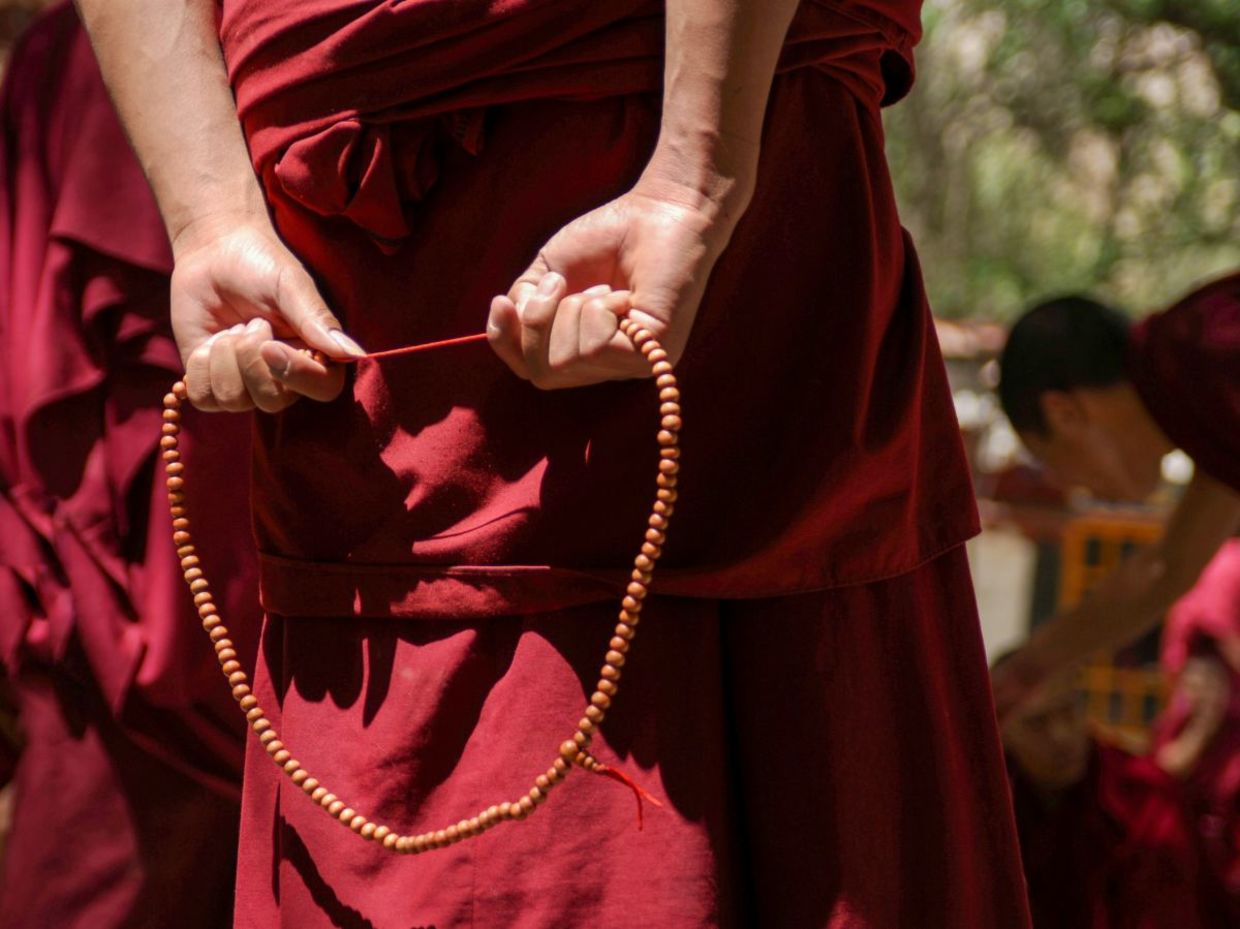
In Tibetan Buddhism, mala beads offer a quiet path for focus, intention, and spiritual connection. As the Art & Object website explains, during meditation, monks hold each bead while reciting mantras through hundreds or even thousands of repetitions. This simple, tactile practice anchors your awareness, allowing the mind to settle and the spirit to align.
You can bring the quiet focus of mala beads into your own practice. Hold each bead between your fingers as you recite a mantra, affirmation, or intention, letting your awareness rest fully in the movement and sound. Rotate the beads slowly, letting each one mark a moment of presence, a breath, or a thought released. Treated with care and intention, your mala becomes a personal companion, turning ordinary moments into small acts of devotion and mindful connection.
YOU MIGHT ALSO LIKE:
5 Sound Meditations to Create Good Vibrations
Understanding Buddhist Views on Compassion
Color These Beautiful Mandalas to Find the Equilibrium You Need!