


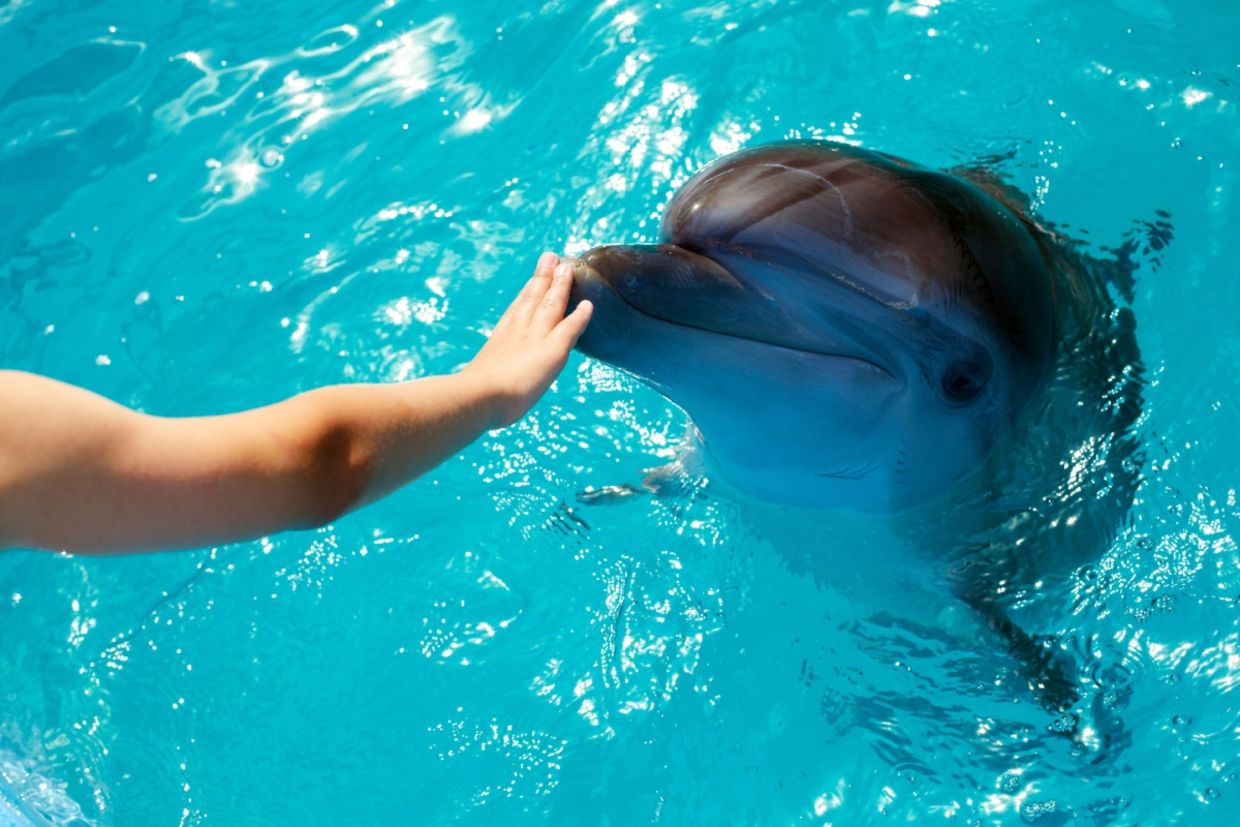
(NataSnow / Shutterstock.com)
Dolphins are one of the friendliest marine animals. With their squeals and faces that look like they’re smiling, they’re also one of the most beloved mammals.
When children spend time with the animals in the water, the experience could support emotional well-being. Families often seek out this type of therapy for children with conditions such as autism or Down syndrome, PBS reports.
What Is Dolphin-Assisted Therapy?
Dolphin-assisted therapy is a form of animal-assisted intervention in which patients work with therapists and dolphin trainers while interacting with the animals. According to National Geographic, sessions often take place in enclosures, where facilitators supervise patients’ interactions with dolphins.
The concept gained popularity in the late 20th century when psychologist David Nathanson began using dolphins as a reward to motivate children with Down syndrome, according to PBS. In some sessions, learning earns the child a chance to swim with the dolphin, encouraging engagement and focus. Psychologists say the excitement of interacting with such a remarkable animal may motivate children to attempt tasks they might otherwise avoid.
Why Families Seek Dolphin Therapy
For many families, dolphin therapy represents hope. Some parents report powerful emotional moments during sessions, such as children making eye contact, showing increased engagement, or speaking for the first time, DeseretNews reports.
Stories like these help explain why families travel long distances and pay high prices for programs. Some sessions can cost thousands of dollars for two weeks of therapy.
The Debate Around Dolphin Therapy
Despite compelling stories, scientific evidence supporting dolphin therapy remains limited. As Aeon points out, the benefits of dolphin-assisted therapy are largely anecdotal. Many researchers say studies promoting the therapy suffer from weak design or lack proper control groups, making it difficult to prove that dolphins themselves cause therapeutic improvements.
Experts suggest that positive changes seen during sessions may be explained by other factors. Being in the water, receiving focused attention from therapists, or simply experiencing an exciting new environment could influence behavior and mood.
Critics of the therapy also point out ethical concerns for dolphins. Dolphins are highly intelligent and social marine mammals that naturally live in vast ocean environments. As the Dolphin Project explains, keeping them in enclosures for therapy sessions can cause stress and disrupt their natural behaviors.
In the end, the question of dolphin therapy remains open. For many families, the experience brings joy, motivation, and moments of connection that feel deeply meaningful. At the same time, the debate is ongoing as to whether the therapy provides measurable benefits and whether dolphins should be used in this way. As research and ethical conversations evolve, dolphin-assisted therapy remains a subject of curiosity, hope, and ongoing debate.
YOU MIGHT ALSO LIKE:
Could Dolphins Have Their Own Language?
The Power of Pets: The Benefits of Animal Companions for Seniors
Rescued Performing Dolphins Free to Live Their Happy Ending