A Teen Invents an Efficient Water Filtration System in Her Garage
Game-changing inventions don’t always come from established businesses or well-known laboratories. A number of successful companies and inventions were created by ordinary people operating out of their homes or garages.
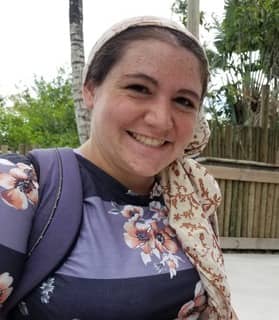
Mia Heller, a high schooler from Virginia, may have joined the ranks of famous garage innovators, Smithsonian Magazine reports. Despite being just 18 years old, Heller has already created a new system for removing microplastics from drinking water without relying on expensive filtration membranes.
View this post on Instagram
Microplastics in Water
Heller is a student at Kettle Run High School who also attends part-time enrichment classes at the Mountain Vista Governor’s School. She became inspired to tackle water filtration after learning about water quality concerns in her area due to microplastic pollution.
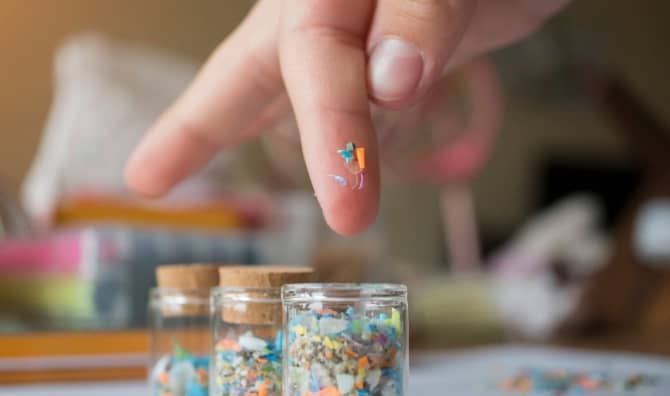
Microplastics are tiny particles of plastic and are a worldwide concern because they pollute the environment and have been found in humans and animals. “There are still a lot of questions as to whether these plastics are really impacting our health at this point,” toxicologist Matthew J. Campen tells Smithsonian Magazine. However, these contaminants have been linked to a number of health issues.
Inspired by a Home Filtration System
After the article came out, Heller’s family invested in a water filtration system. However, the system required regular maintenance and constant replacement of the filtration membranes.
When Heller watched her mother repeatedly replace the filtration membranes, it motivated her to look for a better solution. “It inspired me to design a filter without the use of membranes, to decrease the costs and maintenance needs associated with water filtration,” Heller tells Smithsonian Magazine.
Ferrofluid Instead of Membranes
Heller looked for an alternative to membranes, People reports. She turned toward a substance called ferrofluid. Ferrofluid is a magnetic liquid that can attract and remove microplastic particles, leaving cleaner water behind.
Another benefit of ferrofluid is that much of it can be collected and reused to filter another batch of water. “The result is an affordable, low-waste filtration system without the use of a solid membrane,” Heller shares with People. The unique system can remove more than 95 percent of the microplastics in water and is about the size of an average home appliance.
A Three-Module Design
Heller’s idea didn’t come overnight, according to Smithsonian Magazine. The system was the product of around a year and a half of experimentation and problem-solving. She would later create what she called a “spinning magnified vial.” Ferrofluid and water combined in that vial, helping remove microplastics from the water. Still, the container required regular upkeep.
Heller tried several different methods for separating out and reusing the ferrofluid. Eventually, she landed on a solution — creating separate containers for the water, the ferrofluid, and the mixture. Heller’s current design has three modules. One module holds the contaminated water. One contains ferrofluid. The two components only mix in the smaller third module. “A magnetic field pulls the microplastics out of the water, and the ferrofluid is recovered and reused in a closed loop,” Heller told Smithsonian.
Next Steps for the System
Heller’s invention earned her finalist status at the world’s largest science competition for high school students, the Regeneron International Science and Engineering Fair. Now she is considering her next steps for the invention. “I would love to eventually bring it out to market,” she says. “I think that would be something that would be really interesting.”
From her garage workshop to an international science competition and possibly to the wider market beyond, Heller’s invention shows that young people can play a role in tackling major global and health issues. Heller’s system addressed a problem that her family struggled with and may help many other families around the world in the future as well.