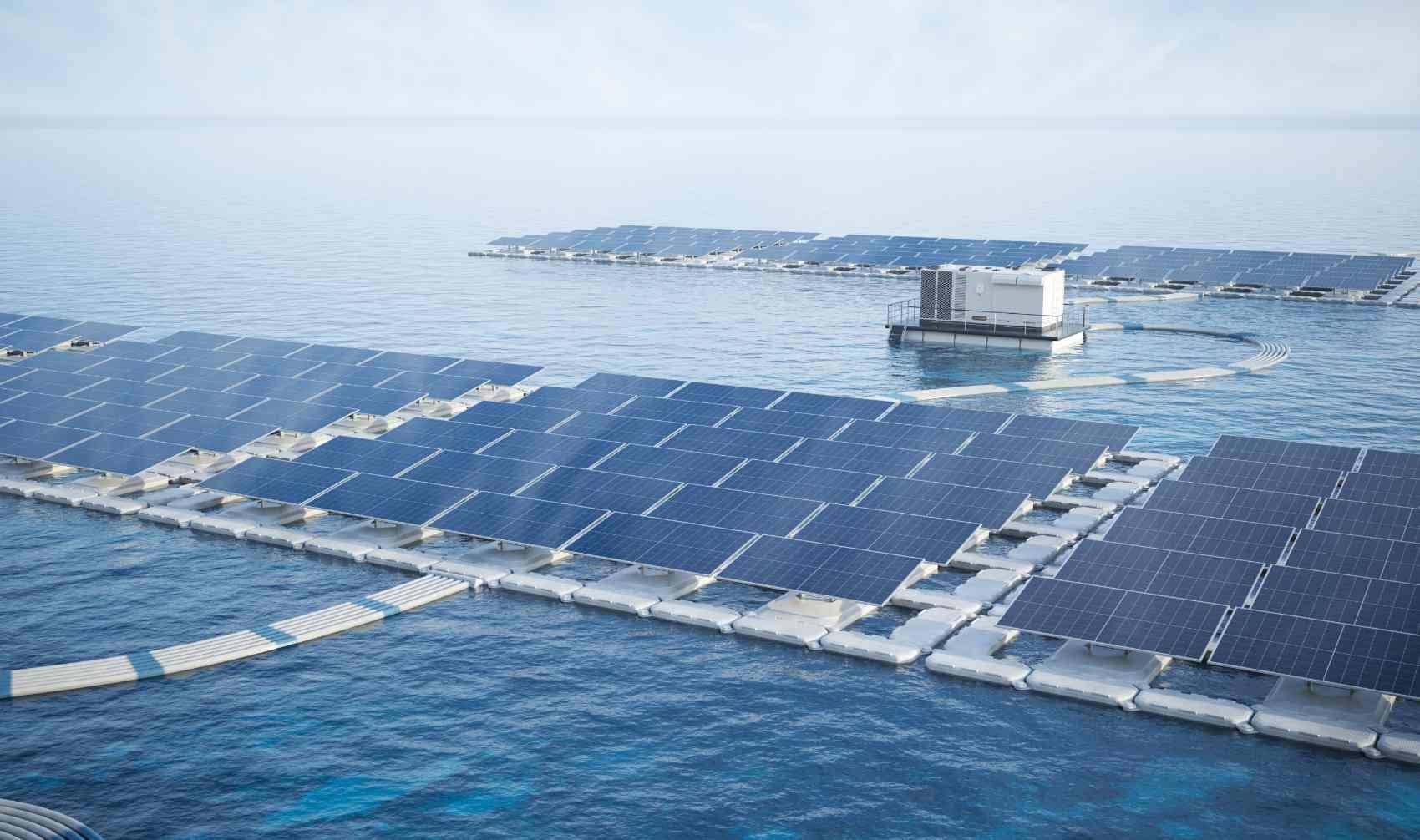
Can Solar Power Work Under the Sea?
Have you ever scuba dived or went snorkelling in a coral reef? If you have, you know that the universe under the sea is one filled with beauty, wonder, and amazing creatures. Everything looks slightly different under the water, the shapes of things, the colors, even the light.
This has a fairly simple scientific reason, and that is that light waves travel through water differently than they do through air. That is why it is nearly impossible to use solar panels under the sea. But recent research published in Joule has made an important breakthrough by creating solar panels that can collect energy as far as 32 feet (10 meters) under the water.
Light Bounces off Water
According to Science Alert, the difficulties of creating solar panels under the sea, is that essentially, most lightwaves bounce off water, and those that do pass through water scatter over much shorter distances than they do through air. This is why, the deeper one goes into the ocean, the less red they see. Only the shorter, blue-green wavelengths of light reach the deeper areas of the sea.
In order to overcome this issue, the researchers had to be a bit creative. Instead of using photovoltaic cells, which are the type of cells used in almost all regular solar panels, they created cells out of lead halide perovskite, a kind of semiconductor crystal. These cells are designed to capture mostly blue and green lightwaves, which are the types of wavelengths found deeper under the ocean.
Lighting up an LED
In order to test the solar cells, remotely operated robots brought them to depths of 2 meters, 6 meters, and 10 meters respectively off of Weizhou Island in the China Sea. The cell at 2 meters captured 1,416 milliwatt-hours (mWh), the one at 6 meters, 752 mWh, and finally, the one at 10 meters captured 324 mWh, which is enough power to light up an LED sign.
The tests validated the idea that solar panels could, indeed, work under water, according to a press release from Cell Press. “This work presents the first functional validation of submerged solar cells practically operating at a water depth of up to about 10 meters, greatly broadening their application scope,” Wen-Hua Zhang, of Yunnan University in China, and one of the study’s authors said in the press release
In addition, the researchers estimate that the cells could remain operational under the water for around five and a half years, and could eventually power things like communications systems, cameras, and underwater sensors.
Off-Grid Uses of Solar Power
As Euro News reports, these underwater solar panels are just one example of the growing trend of solar energy being used in places the electric grid cannot reach. For instance, a former radio station situated on the remote Nordic archipelago Svalbard is currently being powered by solar energy. Inaccessible except for by boat or helicopter, until now it had been using diesel.
Likewise, in Kenya, a one of its kind solar powered ambulance was just tested. The ambulance can be used to provide emergency medical care to out-of-the-way towns and villages, where access to fuel or electricity is not reliable.
Finally, in Switzerland, solar panels have been installed in between railway tracks, as a way of generating electricity without using up much land. In addition, the panels are removable, so that tracks can undergo maintenance without disrupting the production of power.
Solar energy is part of a growing wave of clean energies that are becoming more and more popular. The ability to create solar energy under the sea, even in only small amounts, could truly revolutionize the field.
A lot of the sea is a mystery to humanity and there is still so much to discover. Now green energy can help find what has been hidden for so long.