Can Spider Silk Help Nerves Regenerate?
Though frightening to some, spiders are one of the world’s most interesting creatures. Their webs are a wonder to behold, as delicate looking as lace, but strong enough to withstand the elements and entangle prey.
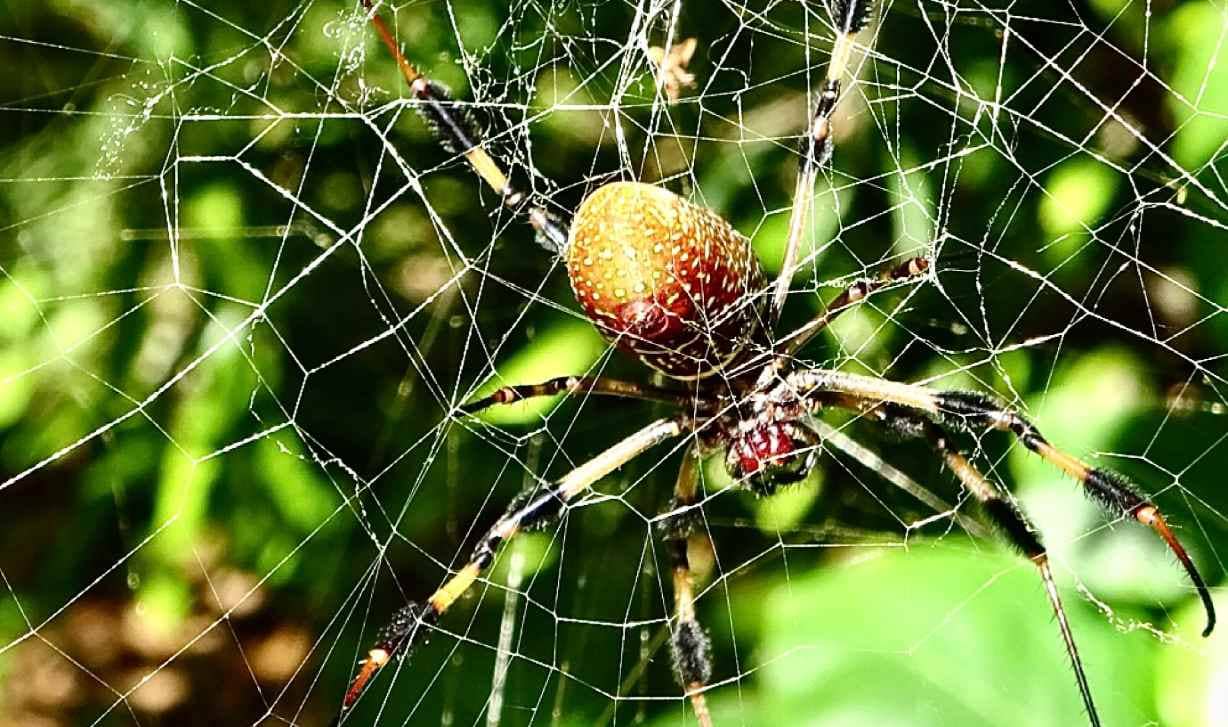
According to the Independent, it is this element — web strength — that has attracted developers in medical fields to the golden orb-web spider. As it turns out, the silk produced by these spiders to create their webs is thinner than a piece of human hair, but stronger than steel by weight, making it an ideal scaffolding for regenerating nerves. Clinical trials will be starting soon.
Telephone Cords
The nervous system is the body’s primary method of communication. Professor Alex Woods, founder of Newrotex, a clinical-stage biotech start-up from the University of Oxford told the Independent, “Nerves are basically like a telephone cord – a tube with lots of little wires that carry information between your brain, muscles, and skin. If you experience nerve damage, from something as serious as being in an accident, to just cutting an avocado – the connection between your nerves is severed.”
Currently treatment for damaged or severed nerves involves harvesting healthy nerve tissue from another site, and implanting it into the damaged site where it can regenerate. However, when it comes down to it this is only moving damage from one place in the body to another.
In the UK approximately 300,000 peripheral nerve injuries are treated annually, with autograft surgery yielding a less than 50 per cent recovery rate. This is where golden orb-web spider silk comes in.
150 Day Scaffold
Golden orb-web spiders are native to southern and east Africa, and though quite territorial, are harmless to humans, The BBC reports. As mentioned above, their silk is minute and very strong and essentially can be used to create a scaffold for nerve tissue to regenerate on to.
The truth is, that nerves, when torn, create their own scaffold, however, these scaffolds only last about 10 days and can only bridge about 1 cm of a gap, since nerves regenerate at a rate of about 1 mm a day. Golden orb-web spider silk, on the other hand, can last about 150 days before degrading into the body, which means that the nerves can use it as scaffolding for longer and thus close a much greater gap.
As the Independent reports, harvesting the silk is a delicate process. The spiders are gently sedated and then their silk glands are stimulated by a tiny brush. The resulting fibers are carefully wound onto custom bobbins ensuring that the strands maintain their structural integrity. Finally, they are ready to be used for nerve regeneration.
It is amazing to think that one little spider could do so much for humanity. Nerve damage can be truly debilitating, but with the help of some spider silk, there is now hope for complete regeneration.