Israeli AI Startup Aims to Diagnose PTSD and Parkinson’s
The brain is one of the most complicated and wondrous pieces of machinery in the human body. It plays a central role in everything from breathing to solving complex mathematical equations. Because of it, making sure the brain operates in a healthy way is crucial.
What if an AI system trained on a large collection of EEG data could learn to decipher patterns in brain activity? According to Haaretz, that is exactly what the Israeli startup Hemispheric set out to do.
A Lack of Data
The brain is a vastly complicated organ, and diagnosing brain health still relies largely on asking patients questions about how they feel. To the founders of Hemispheric, this seemed like a less-than-optimal mechanism for diagnosing brain conditions. They set out to find a way to decipher brain signals using noninvasive technology.
Technology already enables researchers to record electrical brain activity using an electroencephalogram, or EEG. However, what has been missing is the ability to analyze the results. One main challenge has been the lack of a large brain-activity dataset necessary for training the model.
“The brain speaks in a very complicated electrical language, and though large language models practice on all the information on the internet, there was no database of brain activity for a model to practice on,” Gidi Littwin, the chief technology officer of Hemispheric, told Haaretz.
Creating a Brain-Activity Database
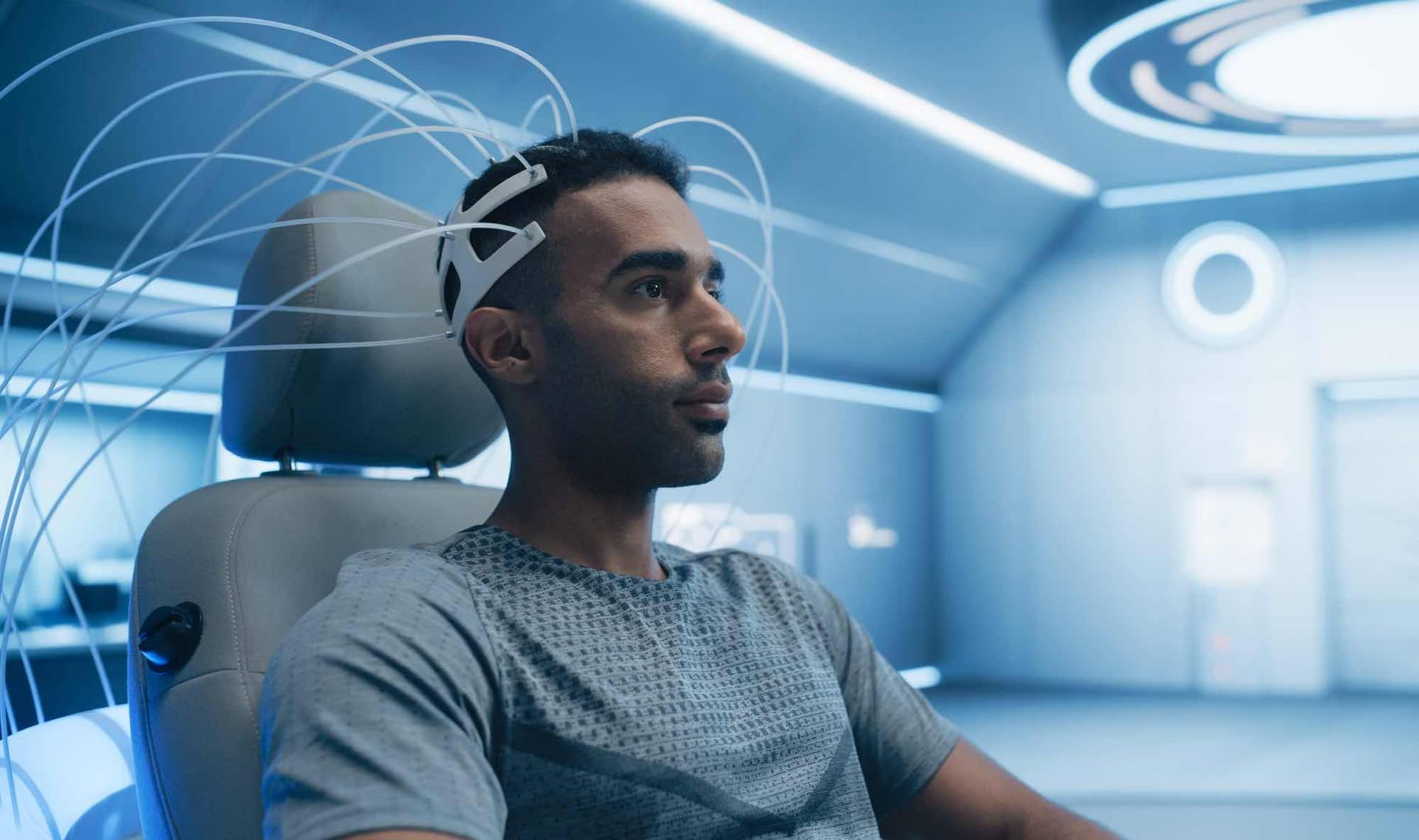
In order to create the database on which an AI system could learn to recognize and analyze brain signals, the team began collecting the data from volunteers at labs in Israel, the United States, and the Philippines. The volunteers would don an EEG helmet and have their brain signals recorded for 15 minutes while they performed various tasks, according to Globes.
The model was trained on more than 250,000 hours of EEG data, along with behavioral data and information from over 100,000 individuals. The model, which is called Descartes, includes 6 billion parameters. It can then analyze the large set of data and provide doctors with information to help with diagnosis, treatment selection, and patient monitoring.
Diagnosing Major Brain Disorders
Hemispheric says Descartes could support the diagnosis of conditions including depression, PTSD, and Parkinson’s disease, as well as the identification of the early signs of cognitive deterioration, Haaretz reports. Meanwhile, the company plans to first target post-traumatic stress disorder (PTSD), mild brain injuries, depression, anxiety, schizophrenia, and Alzheimer’s disease, Globes explains.
In addition to continuing to develop the technology, the team is starting to pursue regulatory authorization. The company has presented its platform to an FDA medical-device center and is pursuing greater use of the system in the US and Europe.
One exciting advantage of AI is its ability to fuel advances in the medical field, with life-changing possibilities. By turning brain-activity data into quantitative information, Descartes could give doctors another tool to help make a difference when it comes to diagnosis and treatment.