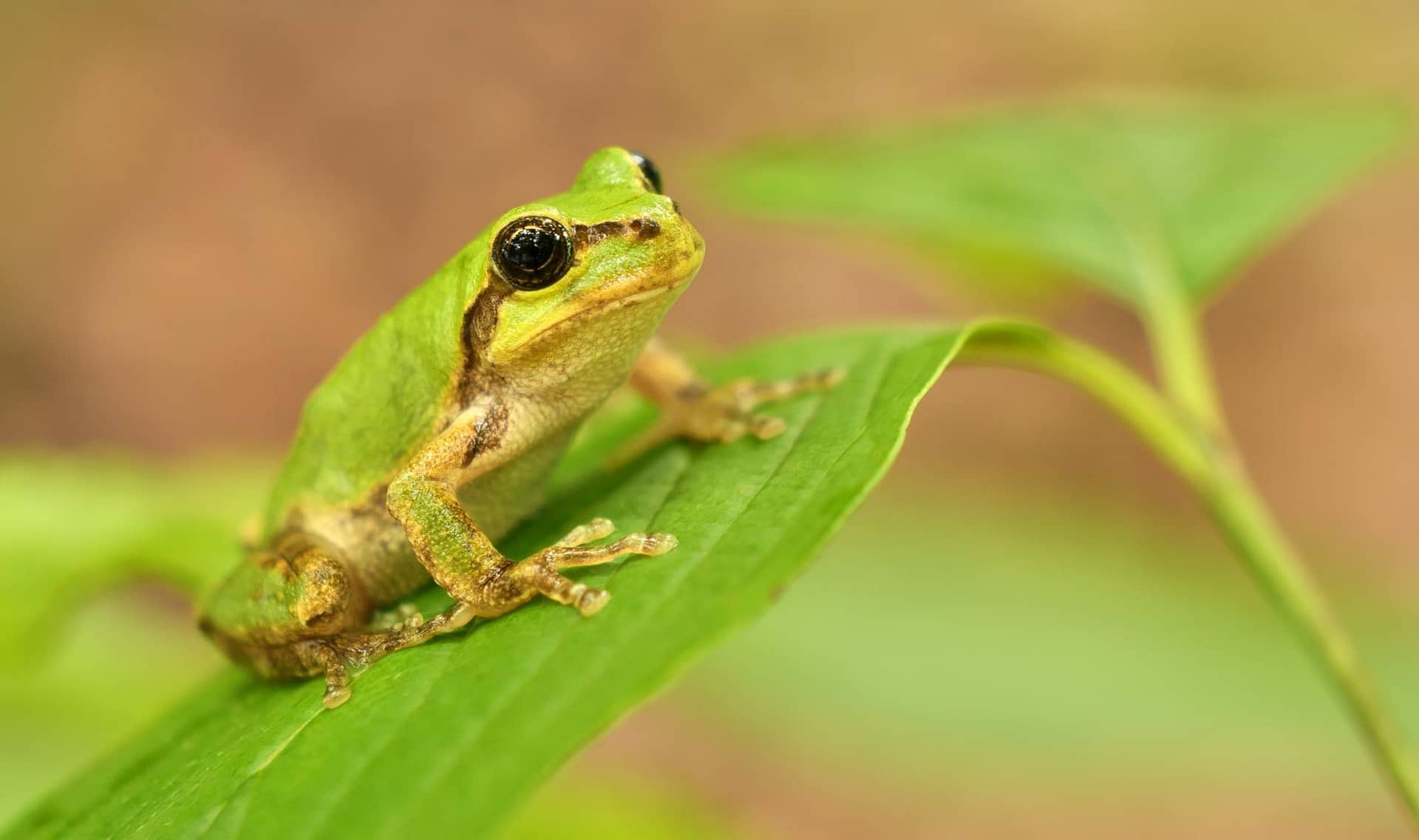
New Hope Against Cancer Comes from Japanese Tree Frogs
There’s nothing quite like spending an evening sitting on the porch and listening to the frogs sing in the night. But, as it turns out, frogs are more than just cute little insect eaters and muppets.
They could also hold clues to developing new cancer treatments. According to a study from the journal Gut Microbes, certain gut bacteria that live in the intestines of Japanese tree frogs may destroy colon tumors in mice.
One Single Treatment
The researchers didn’t just look at frogs; they investigated gut bacteria from two types of amphibians and a reptile. Wild amphibians are known to have low rates of spontaneous tumor formation. So, for the researchers, it seemed like a logical place to start.
They initially isolated 45 different bacterial strains from the guts of newts, lizards, and frogs. After screening the strains and testing potential candidates, Ewingella americana, a bacterium found in the guts of Japanese tree frogs, emerged as the most promising.
Not only did a single dose of the bacterium shrink colon tumors in mice, it got rid of them completely. And, even more impressively, the cancer didn’t recur when mice successfully treated with E. americana were later reinjected with the same type of cancer cells.
A Two-Pronged Attack
So how does this bacterium work? E. americana appears to fight cancer in two ways that complement each other, ScienceDaily reports. First, it can thrive in low-oxygen environments, including the oxygen-deprived regions commonly found inside tumors. Once it reaches the tumor, the bacterial population can rapidly increase by roughly 3,000-fold within 24 hours, directly damaging cancer cells.
Second, the bacterium also stimulates the immune system. Its presence attracted neutrophils, T cells, and B cells into the tumors, making the immune response stronger and promoting cancer cell death. Even more importantly, the bacterium accumulated almost entirely inside tumors as opposed to within healthy organs. It also left the bloodstream quickly, with a half-life of about 1.2 hours, and became undetectable within a day. The treatment caused only mild inflammation that resolved within 72 hours.
Future research will test whether the approach could work against other solid tumors, such as breast cancer, pancreatic cancer, and melanoma. Researchers also plan to investigate whether E. americana works even better when used with chemotherapy or immunotherapy. The new finding may offer hope amid a concerning trend. It comes amid a rise in the number of young people who have been diagnosed with colorectal cancer, according to Good. Colorectal cancer is now the leading cause of cancer-related death among people under 50.
If E. americana eventually proves effective against colorectal cancer in humans, it could change lives for those diagnosed with the disease. It just goes to show that one should never underestimate the power of a frog.