Can Hydropower be the Next Renewable Wave?
Hydropower, using the power of water to create energy is not new. Dams have been used to produce electricity for hundreds of years, and watermills have been used to power machines for even longer than that.
However, the modern pivot towards clean energy has brought to the fore even more innovative ways in which water and its movements can be used to produce energy, according to The Starfish.
Hydropower and wave power are similar, but not quite the same things. Wave power is generated from the natural movement of the waves, while hydropower is generated by dams.
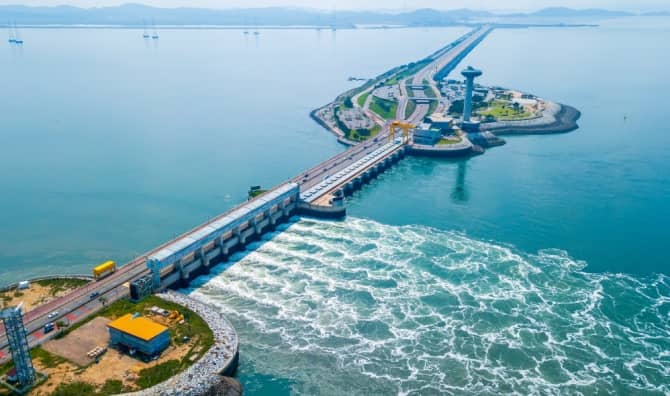
In addition, according to Sustainability Magazine, there is also tidal power, which uses the predictable movement of the tides to generate power. The common denominator between all three of these systems is that they all use the movement of water to produce power.
Turbines and Tides
The idea of using the power of the shifting tides to create energy is not new. In fact, plans to harness the high tidal range of the La Rance Estuary in France were first drawn in the 19th century. The tidal power plant didn’t actually begin generating electricity until the 1960s, but today it produces 40 percent of the electricity used in the Brittany region of France.
In addition, one of the greatest innovations in tidal power, the bulb turbine, was created at the La Rance Power Station. It is this type of turbine that is now used at tidal energy power plants throughout the world.
Wave Power
According to The Starfish, wave power, on the other hand, which is distinguished from tide power in that it uses the motion of waves to generate power instead of the tides, uses a variety of mechanisms to capture energy. The first of these is the attenuator. These snake-like structures ride on top of the waves, bending their body up and down with the movement of the water. Rams connected at the hinges convert the kinetic energy into electricity.
Oscillating water columns, on the other hand, work while being partially submerged in water. Each column has two openings — one above the water and one below it. A turbine sits at the top of the opening above water. The movement of the waves through the water column pushes air upwards where it is sucked through the turbines, thus creating energy that is transformed into electricity.
Overtopping harnesses the energy of waves hitting an artificial barrier. The overflow flows into a reservoir with a water level higher than sea level. This water then flows out of the reservoir via turbines, generating electricity.
Finally, point absorbers are free floating structures, anchored to the sea or another structure, that move vertically with the motion of the waves. The vertical movement of the waves creates electricity.
Because of its enormous potential — the energy on the pacific coast alone could power 60 percent of Canada’s power needs — wave power is picking up steam.
In 2024, Eco Wave Power, a company based in Israel opened up the first wave energy power plant off the coast of Tel Aviv. In addition, the United States has recently announced that it will invest millions in developing wind and offshore energy in the coming years.
Harnessing the power is not new, but what is new is the awareness that humanity must use everything that nature has provided in order to build a cleaner, safer, and healthier world. This has led to tremendous innovation in the fields of clean energy — including the use of wave and tidal power.
The solutions to climate change are there to be discovered. All it takes is a little bit of creativity and knowledge.