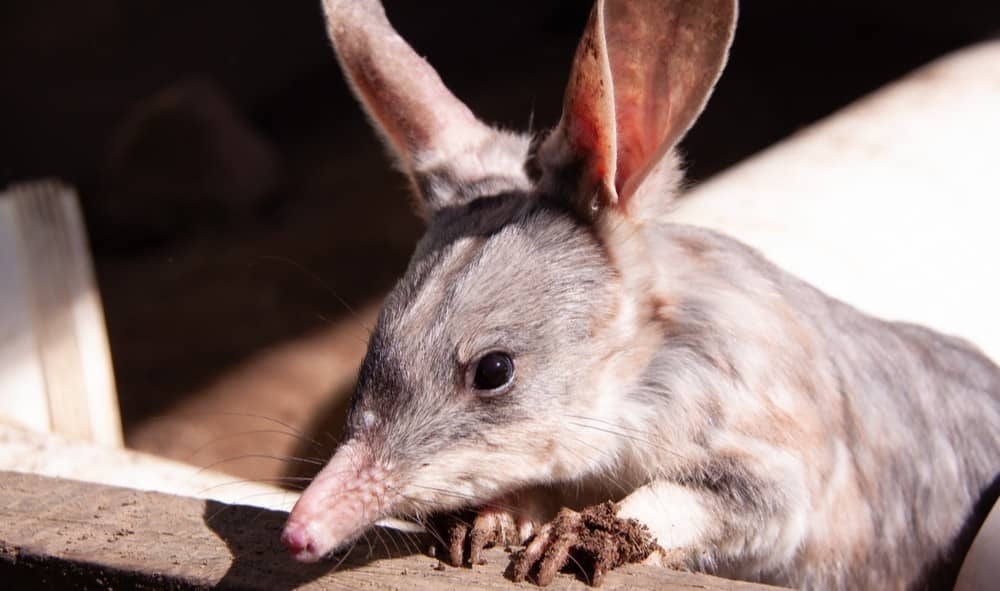
Cute Australian Marsupials Reintroduced to Queensland Outback
Bilbies are undeniably cute! These nocturnal, furry, burrowing mammals have been absent from one of their key natural habitats in Queensland, Australia since the 1970s.
Now conservationists are working to change that. Recently, 150 bilbies were released back into the wild at Currawinya National Park in southwest Queensland, as The Epoch Times reports, marking an encouraging step in efforts to restore the species to its former range.
Heading Home
It is hard for conservationists to remain emotionless as they witness a historic moment: the reintroduction of bilbies into parts of their former habitat where the species had become locally extinct.
Save the Bilby Fund CEO Kev Bradley described the emotional experience to ABC News. In August 2026, he opened a small hessian bag and watched as a bilby gently bounced out and disappeared into the surrounding landscape.
“You’ve got a lump in your throat. It’s pretty rough in the bush. But it takes my breath away,” he says.
As Bradley explains to The Epoch Times, releasing bilbies into the wild is an essential step in the species’ long-term recovery.
The translocation was both challenging and rewarding. The Save the Bilby Fund team was joined by 28 experienced volunteers and veterinarians, working under the western Queensland stars to trap, examine, prepare, and release the bilbies.
According to the nonprofit, the summer 2026 release was years in the making. The organization works across captive breeding, conservation science, health assessments, feral predator management, and rewilding programs, all aimed at restoring bilby populations to parts of their original range.
The effort also builds on previous challenges at Currawinya National Park. ABC News reports that feral cats breached the protective fence surrounding the bilbies in 2003. Then in 2021, several bilbies managed to escape the protected area and establish themselves beyond the fence.
Now, 150 of these native Australian marsupials have been released beyond the predator-proof enclosure in an effort to help them reclaim more of their former habitat.
The journey, however, is far from over. Conservationists will continue monitoring the bilbies while managing feral predators and other threats in and around Currawinya National Park.
Bilbies Revered in Traditional Stories and Art
The bilby is a species of deep cultural significance for Indigenous Australians, according to the Indigenous Desert Alliance. Bilbies have come to symbolize biodiversity conservation, First Peoples’ cultural heritage, and even an alternative Australian Easter icon.
Bilbies are marsupials — a distinct group of mammals found in Australasia, as well as the Americas. Unlike most mammals, marsupials give birth to relatively underdeveloped young, which continue growing after birth, often inside a mother’s abdominal pouch, as Science Direct details.
Medium-sized marsupials, bilbies are instantly recognizable by their remarkably long, pinkish ears. These sensitive ears provide excellent hearing and also help dissipate heat in Australia’s often harsh environment. Their long, pointed snouts are perfectly suited to digging through the soil in search of food, including bulbs, insects and witchety grubs —the plump larvae of wood-eating insects.
Bilbies have long, gray fur, paler fur on their bellies, and distinctive tails ending in a fluffy black tip. They can weigh up to 2.5 kilograms (5.5 pounds.)
Their underground homes are remarkable too. Each bilby constructs multiple burrows that can stretch up to three metres (9.9 feet) long and reach two meters (6.6 feet) below the surface, providing protection from extreme heat and predators.
As they dig, bilbies move large amounts of earth, making them important ecosystem engineers. Their burrowing activity can help aerate and redistribute soil and influence the availability of nutrients. Bilbies may also partially seal burrow entrances, helping keep the temperature at a cooler 23 degrees Celsius (73 degrees Fahrenheit), and provide additional protection from predators.
Known by names including Ninu and Mankarr, bilbies are also embedded in the cultural traditions of Aboriginal peoples. They feature in Tjukurrpa, a complex system of religious beliefs, traditional law, cultural knowledge, and moral principles. The term is often translated into English as “Dreamtime,” as the Western Australia Museum details.
Historically, bilbies also served as a source of food for Indigenous communities, and were part of the traditional relationship between people, Country and native wildlife.
Bilbies Under Threat
Australia was once home to two bilby species, the greater bilby and the lesser bilby, according to The Australian Museum. Today, the greater bilby is the only surviving species — and is simply known as “the bilby.”
The iconic Australian marsupial is classified as vulnerable on the IUCN Red List, and under Australia’s national environmental law. The Zoo and Aquarium Association Australia estimates that fewer than 10,000 mature bilbies remain in the wild.
Since European settlement, bilbies have disappeared from much of their former range. Bush Heritage Australia News reports that they once inhabited around 70 percent of Australia; today, they survive primarily in arid and semi-arid regions.
Their biggest threats include feral cats and foxes, along with dingoes. Habitat degradation caused by overgrazing from livestock and introduced herbivores such as camels and rabbits also puts pressure on remaining populations. Wildfires pose another significant risk.
Conservation efforts are now helping to turn the tide. A national recovery program combines protection of remnant wild populations with predator-free fenced sanctuaries, and intensive captive breeding programs. Conservation organizations, universities, Traditional Owners —including Aboriginal and Torres Strait Islander peoples, and government agencies all play important roles. Desert rangers also help protect bilby habitat by managing predators and reducing wildfire risks, according to the Indigenous Desert Alliance.
Following the release of 150 bilbies at Currawinya National Park, Steve Peck of the Queensland Parks and Wildlife Service told ABC News that conservations will monitor the animals using cameras, tracking devices, and burrow counts.
For Peck, however, the ultimate measure of success is delightfully simple: a visitor to Currawinya spotting a bilby bouncing through the landscape.
And perhaps, one day, staff will even need to put up a sign reading: “Beware of the Bilby Crossing!”