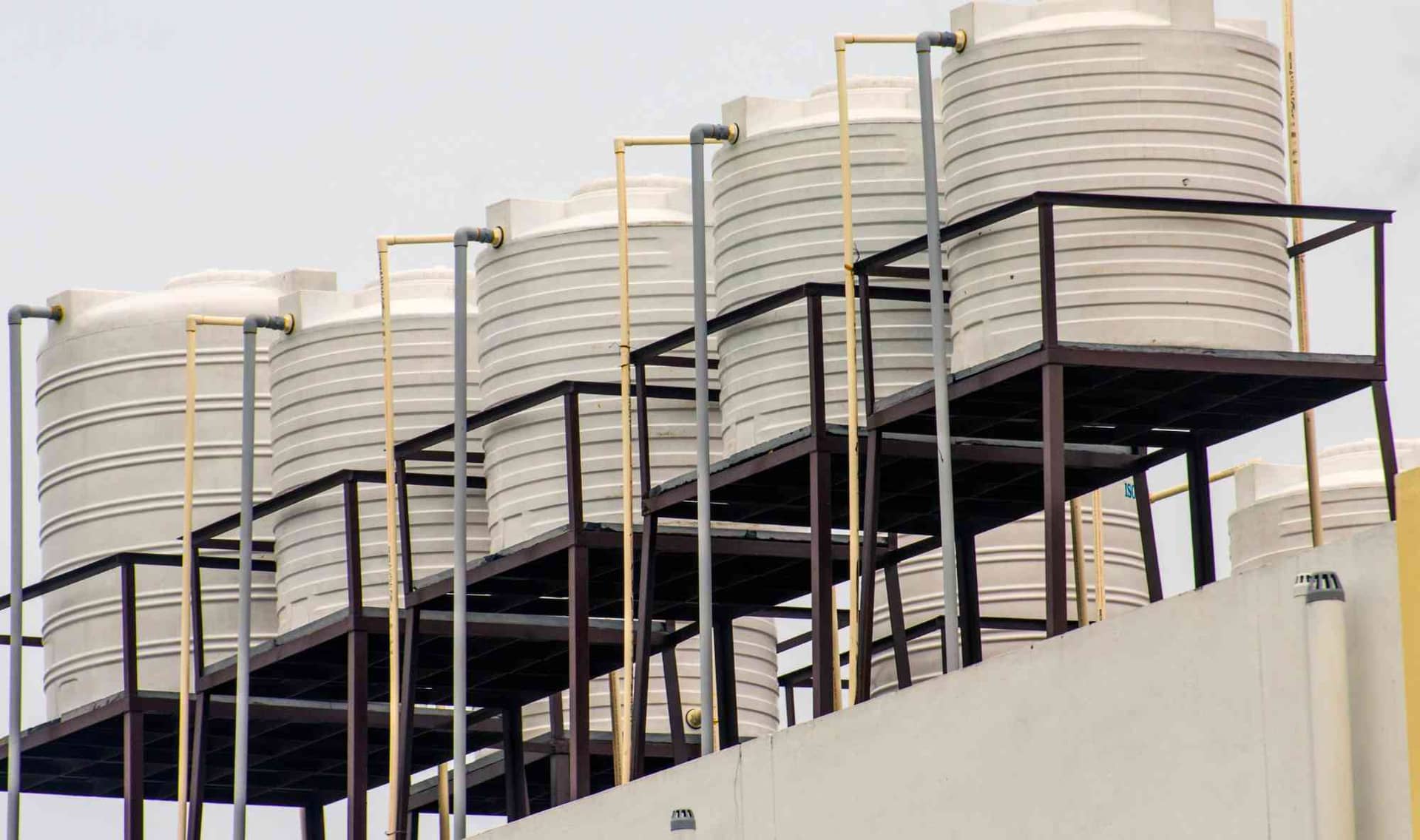
Harvesting Rainwater From Rooftops Could Cut AC Use
During the summer, when the temperatures rise, people go inside and turn the air conditioning on. With sizzling temperatures, trying to stay cool is the new way of life. Especially in Europe where temperatures have been much higher than usual.
But running air conditioners also add to the overall heat, reported EuroNews. That’s because the heat that is removed from homes and businesses is vented outdoors. But new research from the University of Manchester in the UK shows that harvesting rainwater from rooftops that stores and sprays the water on hot buildings could be an innovative solution.
That’s because cooler roofs transfer less heat into buildings and this lowers demand or air conditioning and reduces the amount of heat released into urban areas as well as cutting energy consumption. This could lessen the effects of extreme heat days and shrink flooding events.
Why Use Roofs?
The research team led by Dr. Zhonghua Zheng designed and tested the rooftop water collection, which they call RWTSP using Tokyo, Japan as a real-world test subject, according to Scientific Inquirer.
Our study shows that harvesting rainwater from roofs and using it strategically for cooling could provide a practical way to reduce both energy demand and urban temperatures,” Zheng, who is Co-Lead for Environmental Data Science and AI at the Manchester Environmental Research Institute, told Scientific Inquirer.
To evaluate the system without having to install tanks and sprinklers on the roofs of real buildings, the researchers built a new module inside the Community Land Model Urban. This is a widely used urban climate model that simulates how heat, moisture and energy move through buildings.
The simulations were constructed using data collected in the Yoyogi neighborhood of Tokyo. An area of mid-rise buildings. The data was validated before using.
The team assessed three variables, the size of the collection tank, the intensity of sprinkling, and what temperature will activate the system. They turned to machine learning to generate predictions and found that the AI data closely matched real climate-models.
Not a Fix for All
The researchers noted that the roof rainwater cooling system will not work in every city. There are variables about the amount of local rainfall, regulations about harvesting rainwater and moisture risk to the roofs. Regions that have reliable rainfall and high cooling demand will benefit the most. But Arid cities with less rainfall will not benefit from this system.
There are other methods that can help cool cities according to EuroNews. One solution is cool roofs that are painted white. “If widely adopted, cool roofs can significantly reduce the ground-level air temperature of a city,” Dr Charles Simpson from the UCL Bartlett School Environment, Energy & Resources, told EuroNews.
Other methods that can be used are green roofs where plants help keep buildings cool. With the world getting hotter, any and all of these heat solutions would improve the quality of life for urban dwellers.