How Paris is Using the Seine to Replace Air Conditioning
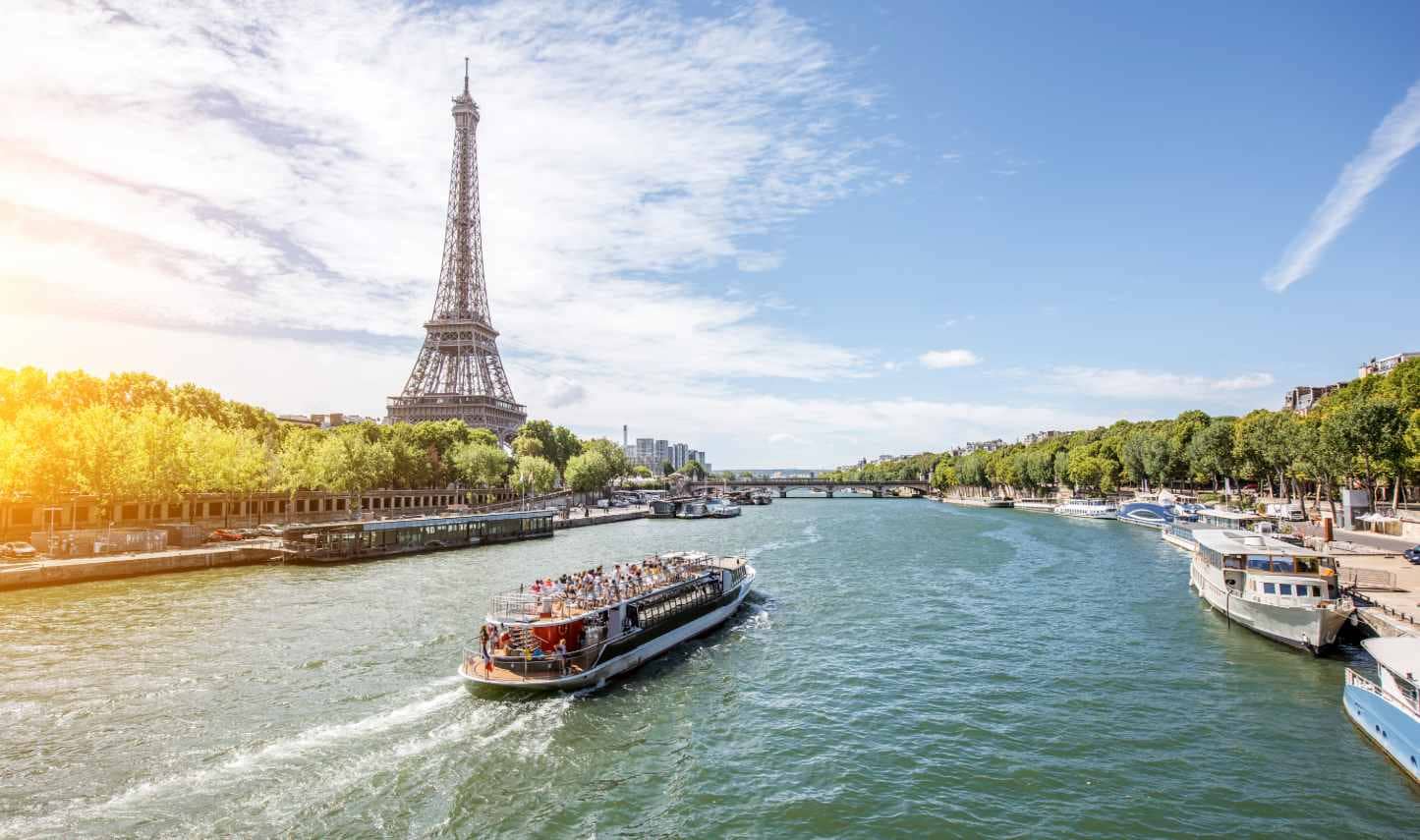
When people think of Paris, they often think of the Notre Dame Cathedral, the art, the food, and the romantic and magical River Seine that flows through the heart of the city. The Seine is more than just a river — it is a fundamental part of Paris itself.
According to The Guardian, as heat waves strike Europe, the Seine is taking on another role. It’s cooling buildings across Paris.
75 Miles of Pipes
In the 1990s, a subsidiary of Paris’s electric utility, Engie, began developing a district cooling network that now spans 75 miles and serves museums, offices, hospitals, schools, and other public buildings. In 2022, the company Fraîcheur de Paris, which means “the freshness of Paris,” took over the contract and began a multiyear expansion.
Cold water from the Seine flows through one pipe next to a separate pipe carrying warmer water from city buildings. A thin metal wall and a heat exchanger allow heat to pass from the building water into the river water without the fluids mixing together. The cooled building water then circulates back through connected buildings, while the Seine water returns to the river slightly warmer. Although the system returns slightly warmer water to the Seine, monitoring has shown only small, regulated temperature changes that remain within environmental limits, with no clear evidence of ecological harm so far.
“It’s a kind of miracle solution in the era of global warming,” Thibauld Voïta, an energy and climate expert and adviser at the Jacques Delors Institute, told The Guardian. According to The World, the cooling network is part of Paris’s wider strategy to adapt to climate change and rising temperatures. The city has also decided to plant more trees, rehabilitate public buildings, and encourage people to reduce their energy consumption during the summer.
Not the Only City
But Paris, as The Guardian notes, is not the only city to use its natural water resources as a cooling system. Toronto uses a system that pulls water from Lake Ontario, and Stockholm uses seawater from the Baltic to lower electricity usage amid heat waves. However, not every city has the funding, concentrated cooling demand, existing underground space, or suitable geography needed for such a network. The Thames, for example, does not have the ideal flow or temperature for this type of project.
Still, it is wonderful to know that people began innovating and planning environmentally friendly ways to use a city’s natural resources decades ago. These efforts continue to support the fight against climate change today.