India’s Iconic Stepwells: Rediscovering a Forgotten Water Solution
At a time when the impacts of climate change are dominating global headlines, communities around the world are increasingly looking to the past for practical solutions to today’s challenges.
India’s iconic stepwells, or baolis, ancient multi-storey structures designed to provide access to groundwater, are among the historical innovations attracting renewed interest, reports News SX. Long neglected, and in many cases, buried for centuries, these remarkable structures are now being reconsidered as potential tools for addressing a pressing contemporary challenge: worsening water scarcity.
A Severely Water-Stressed Country
India is facing acute water stress. Home to approximately 18 percent of the world’s population, the country has access to just four percent of the world’s available freshwater. Groundwater is a vital resource, particularly in rural areas, where it supports both domestic needs and agriculture irrigation. The Guardian warns that more than 600 million Indians face high-to-extreme water stress, while the country’s water demand is projected to double by 2030.
Climate change is placing further strain on India’s already vulnerable water resources. Increasingly unpredictable rainfall patterns are disrupting the replenishment of groundwater reserves, while rising temperatures accelerate soil moisture loss. At the same time, intense rainfall can generate greater surface runoff, reducing the proportion of water that infiltrates the ground and replenishes aquifers.
Against this backdrop, traditional water-management structures are attracting significant interest for their potential to help alleviate water shortages, and strengthen India’s capacity to adapt to a changing climate. As Earth Island Journal explains, these approaches could contribute to “building climate resilience.”
Looking to the Ingenuity of Times Past
As the adverse impacts of climate change increasingly dominate global headlines, the need for sustainable solutions has become ever more urgent. CNN reports that researchers have linked this summer’s unprecedented and deadly European heatwave to human-induced climate change driven by fossil-fuel pollution.
In response, communities are increasingly rediscovering the ingenuity of earlier generations in addressing today’s environmental challenges.
Goodnet has highlighted renewed interest in the ancient wind catchers of Iran’s desert cities. These traditional cooling towers are attracting architects and engineers for their ability to cool buildings without the energy demands and environmental costs of conventional air conditioning, which can release potent greenhouse gases through refrigerant leaks.
A similar principle underpins India’s traditional water-management systems: slowing water down and allowing it to seep into the ground to replenish groundwater reserves. Among the best-known examples are stepwells. These are subterranean structures with flights of steps descending towards the water. According to News SX, thousands of traditional water systems were built across India between the 7th and 19th centuries.
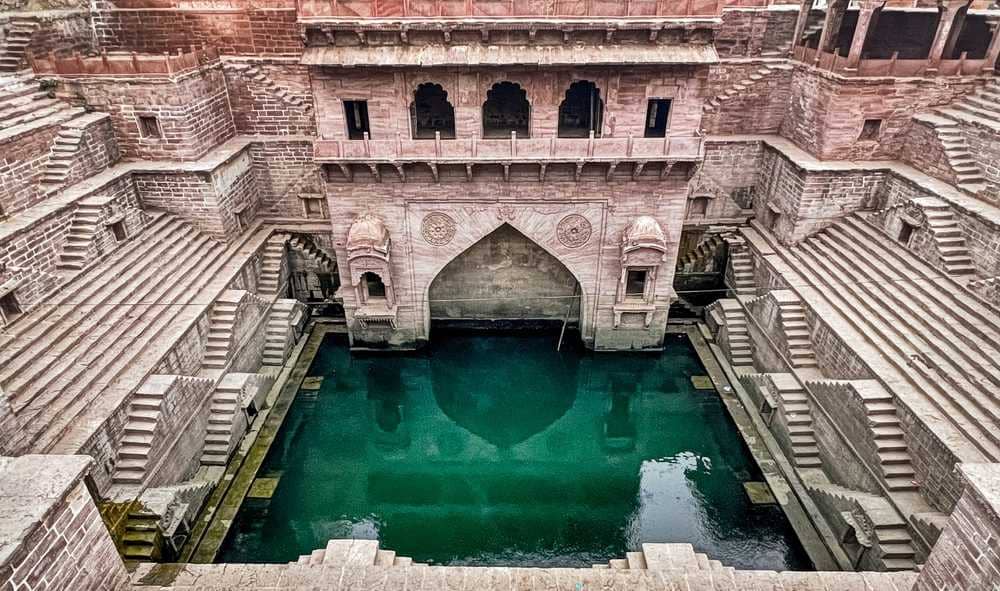
As the Earth Island Journal explains, stepwells typically featured multiple layers of stepped corridors leading towards an underground water source. Beyond providing access to groundwater, they served as community gathering hubs, and cool retreats from the heat.
Their elaborate Hindu carvings, colonnades and domes also blended functional engineering with artistic expression, as Lonely Planet details. These remarkable structures transformed the everyday task of collecting water into an architectural spectacle.
Once widespread across India, stepwells ranged from simple wells to ornately carved monuments. Many surviving examples are found in the arid regions of western and north-western India, particularly in Rajasthan. Designed to capture and store seasonable monsoon rainfall, they helped communities conserve precious water supplies for dry months and periods of drought.
Into the Future
Although many traditional water systems fell into disuse over time, many of these forgotten treasures are now being restored to help India cope with growing water scarcity, as the Guardian observes.
The BBC has described many of India’s stepwells as architectural marvels descending deep into the earth like inverted fortresses. It also highlights their potential to help parched communities. Worsening water scarcity and climate change are prompting communities to bring these centuries-old structures back into use.
Earth Island Journal highlights the Aga Khan Trust’s restoration of a 14th century stepwell at Delhi’s Hazrat Nizamuddin Dargah, which is still fed by an active spring. After nearly 8,000 hours of de-silting, cleaning, and debris removal, the restored structure can once again help recharge the local aquifer.
But restoration is only the first step. Regular maintenance, including cleaning and de-silting, and sustained community involvement are vital to keeping these traditional systems functioning effectively.
India’s response to future water crises may not always require new technology; in some places, a valuable part of the solution may already lie under centuries of silt.