Is Fast Fashion Slowing Down in Europe?
A groundbreaking new law has been implemented in Europe, aimed at ending the deliberate destruction of unused clothing and accessories.
As highlighted in the following post from nonprofit Global Fashion Agenda, on a mission to accelerate the transition to a net positive fashion industry, the European Union (EU) has introduced a landmark ban prohibiting large companies from intentionally destroying pristine unsold clothing, footwear, and accessories through burning or landfilling. This measure marks a significant step toward reducing waste and curbing the environmental impact of the fashion industry.
View this post on Instagram
This policy change forms part of the Ecodesign for Sustainable Products Regulation, a cornerstone of the bloc’s efforts to promote more sustainable, competitive, and circular products.
Cutting Fashion Industry Waste Enshrined in Law
As the EU’s European Commission Environment news release documents, this new legislation was implemented in July 2026.
Under this new law, large companies must prioritize keeping unsold clothing, footwear, and accessories in circulation. Rather than destroying it, they are expected to sell it, including through discounts or alternative markets, or to donate it to charities and social enterprises. The only exceptions are items found to be damaged or unsafe, counterfeit items, and those rejected by charities.
Part of the EU’s Ecodesign for Sustainable Products Regulation, as DW details, this new law is initially targeting larger business enterprises with a workforce of over 250 employees, and an annual turnover exceeding €50 ($58 million.)
The regulations will be extended to cover medium-sized businesses in 2030.
In a push for transparency, larger fashion businesses must publish annual reports disclosing the quantity and reasons for unsold products they have discarded, while retaining the relevant records for five years. National authorities are responsible for monitoring compliance, and can impose fines on businesses that violate the rules.
The Challenge of Fashion Waste
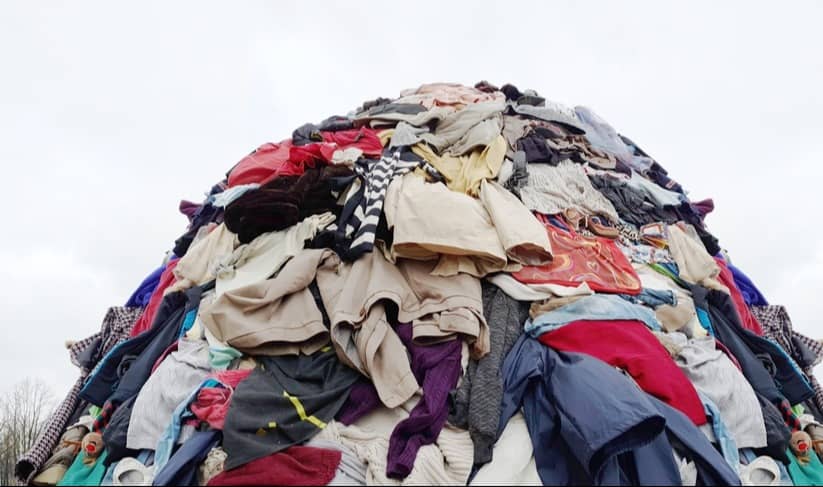
This EU measure was introduced because, as DW reports, hundreds of thousands of tons of fashionwear are discarded across the 27-member EU each year. This is often because of damage, outdated stock, or returns from online purchases.
The scale of consumption is equally striking. According to a post from the European Environmental Agency, the average European buys 19 kilograms (2.2 pounds) of new clothing, footwear and household textiles each year. Yet some of these items are worn only briefly, returned to retailers, or never even used at all.
The problem extends to unsold inventory. An estimated 4-9 percent of all textiles placed on the European market was previously destroyed, through incineration or disposal in landfill, despite never having been used. One in five garments bought online is returned, with around a third of those returned items subsequently destroyed.
View this post on Instagram
Over the past decade, journalists and social media commentators have increasingly raised concerns about “fast fashion” — the production of inexpensive, lower-quality clothing on a mass scale. The model has been fueled by the rapid growth of online shopping, and the convenience of returning unwanted purchases.
As a post from SAC INSiGHT observes, major fast-fashion players include Zara, owned by Inditex; the H&M Group; Fast Retailing, which owns UNIQLO; Associated British Foods plc, which owns Primark; and ASOS.
The environmental impact of this consumption model is becoming increasingly difficult to ignore. The BBC reported that in order to encourage the next generation of music festivalgoers to rewear clothing and embrace secondhand fashion, amid warnings that fast fashion is sending tons of barely-worn garments to landfill.
The article also cites global charity Oxfam, which warns that clothing in the UK is worn fewer than five times on average. This charity is urging young people to move away from constantly buying new outfits from fast-fashion websites, and instead, to seek out pre-loved clothing with a history of its own.
Part of a Circular Economy Vision
The EU’s new ban forms part of a broader circular economy vision, in which products are designed to last longer, and remain in use through reuse, repair, refurbishment, and recycling.
According to DW, the German Retail Federation believes consumers will benefit from the ban, as more discounted apparel should become available through outlet stores, clearance markets, and secondhand channels.
The federation also acknowledges, however, that the new legislation could present challenges for retailers, since not all unsold goods can be easily resold or donated. Issues such as damaged packaging, product condition, and high logistics costs can make redistribution difficult, and, in some cases, economically unviable.
As the European Commission Environment news page highlights, destroying new, usable goods also means wasting the raw materials, water, energy and labor that went into producing them, while their disposal generates avoidable greenhouse gas emissions.
Preventing the destruction of new products can therefore help accelerate Europe’s transition toward a more circular and resource-efficient economy, while supporting its long-term competitiveness.