Israeli Scientists Produce Milk From Safflower Seeds
Milk and the dairy products made from it are very good for your health. But what if milk can be made without the moo? That would be a big gamechanger for people who do not want to consume animal products as well as for the health of the planet.
As global demand for dairy products continues to grow, so do concerns over the greenhouse gasses, water consumption, and land use that is a part of livestock farming, according to a press release from the Hebrew University of Jerusalem. Now scientists have found a way to use crops to manufacture β-casein, an essential protein in cow’s milk. The research was recently published in Frontiers in Plant Science.
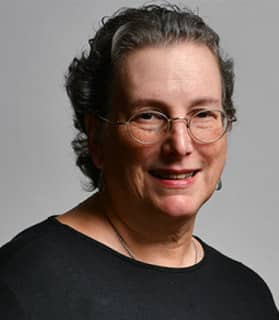
The research team was led by Professor Oded Shoseyov and lead author Almog Ozeri, in collaboration with food-tech companies. The team discovered that the milk protein accumulated inside the plant cells they tested. The plants that performed the best came from safflower plants.
Nature’s Surprise
The way the plants produced β-casein was totally unexpected. “One of the most exciting aspects of science is when nature surprises you,” Shoseyov said in the press release.
“We set out to send the protein to one location inside the cell but instead discovered that the plant had effectively created its own storage solution, giving us valuable insight to engineer more efficient systems in the future.”
The researchers tackled the problem by engineering seeds from Arabidopsis (thale cress) that grows in Eurasia and Africa, reported The Jerusalem Post. They used the plant to provide bovine β-casein fused to an oil-body protein called oleosin. Once the engineered segment of DNA is assembled in the lab, it is transferred to safflower.
Safflower seeds are white, the oil is colorless and flavorless, the plant thrives in hot weather and requires very little water. It is actually an ideal crop for global warming.
The Next Steps
The Hebrew University researchers created a new food ingredient that combines protein and oil. It can be integrated into existing dairy products or used to produce entirely new products that will be more cost effective and sustainable.
Shoseyov pointed out to Jpost that for every 10 refrigerated trucks that carry cold milk, only one regular truck could be used and that the seeds could be stored in a silo for up to a year. This would also save resources. But production still must be scaled up.
“We estimate that in 18 to 24 months, we’ll reach the commercial stage,” Shoseyov said. “The biggest remaining obstacle ahead is adoption of the technique by industry. We have already begun discussions with the US Food and Drug Administration.”
He said that he hopes to see the seed plants grown all over the world and the products for sale on supermarket shelves within five years. Meanwhile he sees the discovery as a big plus for Israel. “But mostly, I hope that our dairy safflower seeds will contribute to the food security of Israel. I look forward to tasting mozzarella cheese made of our novel ingredient.”