Mangrove Forests are Expanding and Thriving
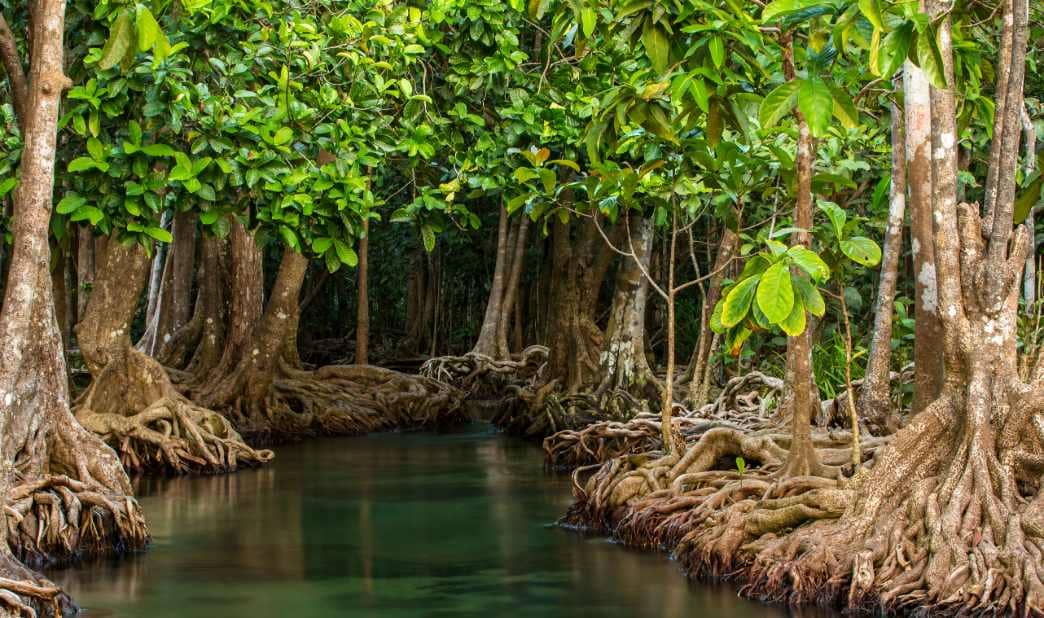
Mangroves, swampy trees which grow along coastal areas, are unsung heroes. These mangrove forests protect people and the land from flooding and guzzle carbon dioxide. They are one of the wonders of the world.
Unfortunately, CBC reported that mangrove forests have been declining due to human development and extreme weather since the 1980s. This has been a major concern. Now,, recent research published in Science that was based on satellite images has shown that the trees are making a comeback.
Zhen Zhang, lead author and postdoctoral researcher at Tulane University in New Orleans, said that the study shows early signs that restoration and conservation efforts are working and this is not due to human intervention. The mangrove trees are healing themselves.
Expanding Faster than they are Declining
The study in Science used satellite imagery from NASA’s Landsat program in order to track the rates of mangrove forest expansion and decline over the years. Surprisingly, they found that though the forests have not recovered to 1980s levels, when the declines began, since 2010, there has been more expansion than decline.
The study used satellite imagery from NASA’s Landsat program in order to track the rates of mangrove forest expansion and decline over the years. Surprisingly, they found that though the forests have not recovered to 1980s levels, when the declines began, since the 2010s they have been expanding faster than they are declining.
This is undoubtedly good news. The BBC reported that mangrove forests are vital for both human and environmental well-being in a number of ways. Mangroves can store up to five times more carbon dioxide than land-based forests can. In addition, their intertwined and thick roots are the habitat of a wide number of species of fish, keeping them safe from predators and providing them with food.
Tsunami Protection
It is these same roots that have woken people up to the importance of mangrove forests. The roots of mangrove trees help slow down the formation of waves and protect land and people from the effects of devastating tsunamis and water cyclones. One of the side-effects of the horrific Indian Ocean tsunami of 2004 as well as the 2008 Cyclone Nargis in Myanmar is that both Indonesia and Myanmar have come to realize that protecting mangrove forests means protecting themselves.
“Some islands were covered by mangroves and after the tsunami those islands were [still] protected very well, so that increased public awareness about the importance of protecting mangroves,” Zhang told the BBC.
Currently, Myanmar and Indonesia are two of the most mangrove-rich countries in the world but that is not the case in other places. There is still rapid mangrove deforestation occurring in Africa, and in Brazil.
New mangrove forests have sprouted along coasts and rivers with abundant nutrients in the sediment. Unfortunately, those nutrients are only there as a result of extreme destruction of forests upstream, leading the rich soil to be swept down to where the mangroves grow.
“This is good news for mangroves – there are more of them than we thought, and they are showing their resilience,” said Dr Pete Bunting from Aberystwyth University, another of the authors. “But it is only really good news if it is not a complete mess upstream.”
Still, taken as a whole, the new research is good news. It is also a sign that people are beginning to realize that what’s good for the earth is also good for humanity.