Introducing a Pioneering New Treatment for Burns
Over the past few decades, medicine has begun to evolve at a prodigious rate. From immunotherapy to biological treatments, new frontiers in healing are here, providing hope for millions of people throughout the world.
Burn care, according to the CBC, has traditionally relied on skin grafts to heal damaged skin. These grafts can be life-saving, but they also leave behind terrible, and disfiguring scars. Now, though, a new treatment based on exosomes, small particles released by cells, may signal a turning point in burn treatment that could make skin grafts a thing of the past.
A student at Weston University was the first burn patient to receive this experimental treatment that could revolutionize burn care in Canada and around the globe.
A Terrible Fire
In December of 2025, according to CTVNews, a fire raged through a frat house near Western University in London, Ontario, after rubbing alcohol was tossed at a lit torch. Five people were injured. The most severely injured was 18 year old Kaitlin Jeffrey who suffered serious burns when her hair and face caught on fire.
After initial treatment at a local hospital, she was transferred to Hamilton Health Sciences Hospital where she underwent a revolutionary and experimental treatment to save her skin, literally.
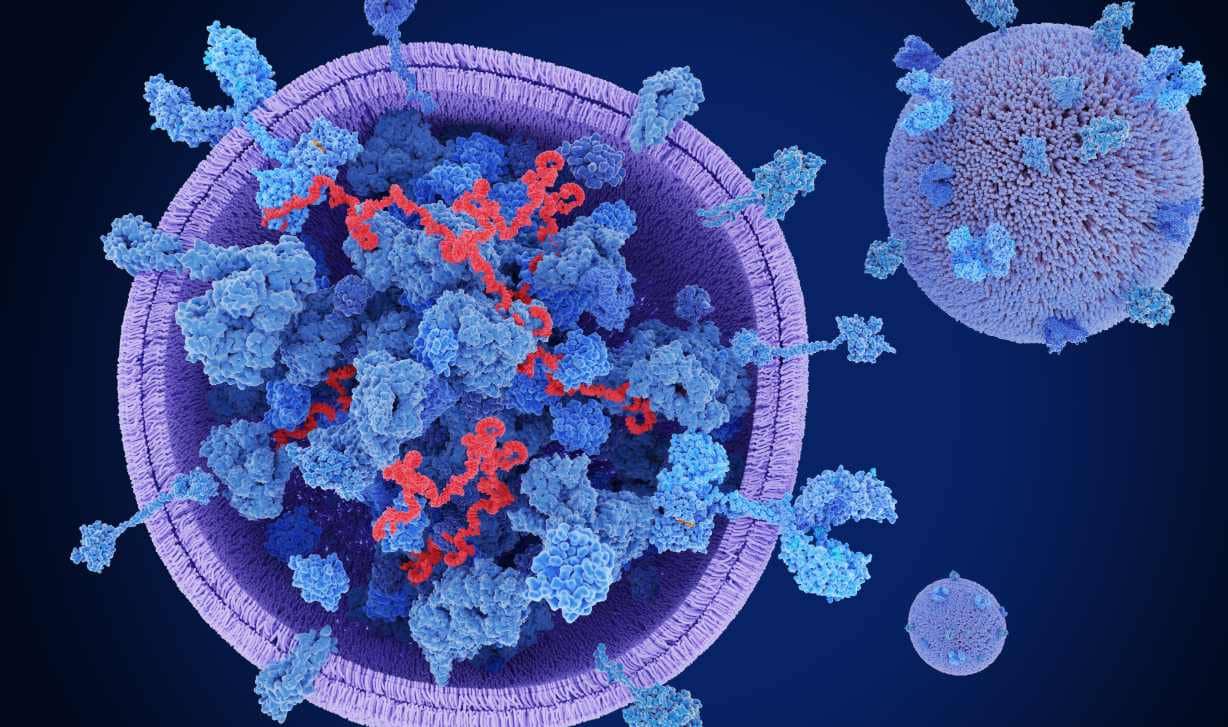
The treatment used on Jeffrey utilizes exosomes, small particles released by cells that are part of the signaling mechanism between the cells that coordinate tissue repair and healing, and reduce inflammation. The particles are injected into the damaged sites to help accelerate healing. They work much faster than skin grafts, and also do not leave behind scarring.
Cell Signalers
Although exosomes have been used in burn research and also been used on people to promote wound healing, this is the first time it has been used on a person to heal burn tissue.
Jeffrey underwent two rounds of exosome treatment and the results were very encouraging. She healed faster and had better results than other burn patients from the fire, who were not eligible for the experimental treatment because they did not require skin grafts.
“It’s honestly a miracle,” Jeffrey told CTVNews. “Being injured in the fire has also had [a] deep impact on my mental health, and it’s something I’m continuing to deal with. But having such good results, particularly to my face, is helping me move forward.”
For a burn patient, often the pain is multifold. There is the pain of the injuries themselves, the long and torturous recovery, and then the pain of an appearance that is forever altered.
Now this new treatment could do so much more than just heal burns faster and better, it can also give patients who have undergone incredible trauma back their sense of self.