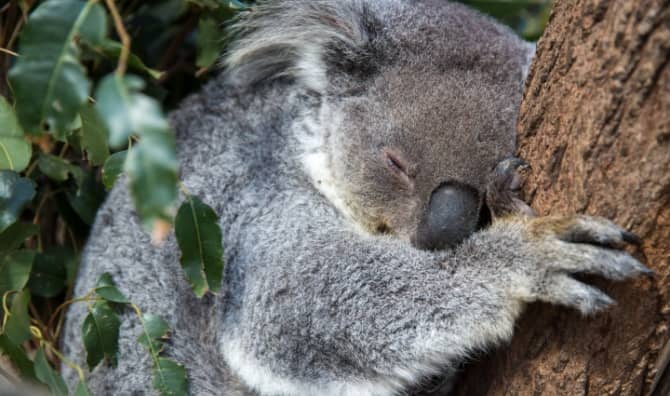
Precious Koala Bears Given a Helping Hand in Australia
An Aussie icon, the koala, stands to benefit from a vast, new protected environmental reserve along the country’s east coast that is the culmination of a thirteen-year campaign by conservationists.
As Mongabay reports, the Great Koala National Park (GKNP) is designed to safeguard koalas along with 66 other threatened native species.
Welcome News for Cute Koalas!
This new conservation area spans circa 1,900 square miles (5,000 square kilometers), and is seen by the Sydney Morning Herald, as a milestone conservation outcome, one fueled by an injection of substantial cash funds, and planning support.
“Koalas are at risk of extinction in the wild in NSW – that’s unthinkable,” New South Wales Premier, Chris Minns, told the Sydney Morning Herald. “The Great Koala National Park is about turning that around. We’ve listened carefully and we’re making sure workers, businesses and communities are supported every step of the way.”
It’s Been a Challenging Time For Koalas Down Under
The word koala is derived from an Aboriginal word meaning “no drink” because this cherished animal receives most of its hydration needs from the moisture in eucalyptus leaves, its main food source, as WWF Australia details.
The population of these adored animals, famous for their fluffy ears, spoon-shaped noses, and tree-dwelling lifestyle, has been rapidly declining in recent years. Koalas are not bears at all, but marsupials, more closely related to wombats and kangaroos.
Once abundant in Australia, koala populations were devastated by the fur trade. While hunting koalas was banned in the early 1900s in several states in the south of Australia, it continued in Queensland until 1927. The most recent IUCN Nature Red List estimate of koala numbers dates back to 2014. Its total given was 300,000 animals, while the IUCN consequently declared the koala population to be decreasing and “vulnerable.”
This more recent depletion is due to habitat loss caused by excessive deforestation and the destruction of the eucalyptus forests koalas rely on. Sustained logging activity and more intense wildfires arising from climate change are the main culprits. To a lesser extent, the diminishing koala population is also due to attacks by dogs, koalas being hit by vehicles, and stress-triggered chlamydia disease. With their increasingly fragmented or lost habitats, more koalas are forced onto the ground in search of food and shelter which makes them more vulnerable.
More recently, in 2024, however, the state government’s Koala Science Team surveyed 680 square miles (1,760 square kilometers) of state forests and national parks using nighttime drones. This research yielded an estimate of 10,311-14,541 koalas in the area of the GKNP.
In September 2023, the government of New South Wales publicised the creation of the new conservation area, and declared a temporary suspension of all timber harvesting within its boundaries.
Ecologist, Mark Graham, has worked extensively with local governments, and has been one of the most outspoken voices in the local struggle to protect koalas, and of the wish to limit the intensive logging activities of the forestry industry in New South Wales:
“When I was a kid, forestry was more sustainable… . Now 30-tonne industrial machines bulldoze everything in their path,” he tells Mongabay.
The New Park Offers Koalas the Habitat Contiguity They Need
The campaigns manager of environmental advocacy group, Wilderness Society. Victoria Jack, tells the Sydney Morning Herald that “Conservation outcomes don’t get much bigger than this. This historical announcement will give koalas a fighting chance for a future.”
Importantly, as the nonprofit Nature Conservation Council emphasizes, the GKNP will connect existing conservation reserves such as Bindarri, New England, and Dorrigo, with state forests, serving as a connected conservation landscape for wildlife. Its director, Jackie Mumford, tells Mongabay that the park is “one of the most significant conservation victories in NSW in decades, ”and is delighted that it will link World Heritage Sites and rebuild wildlife corridors.
Graham is also thrilled that the GKNP will help restore forest connectivity to the koala’s existing fragmented habitats along Australia’s east coast, a must for koalas that depend on contiguous habitats. He views the park as an investment in the future protection of local koalas.
Meanwhile, local conservation volunteers are helping restore the forests that reconnect fragmented koala habitats. Volunteer Sally Cavanagh, for instance, is busy planting young trees on private land bordering the new national park. She picks a variety of fast-growing eucalyptus species to help form essential wildlife corridors between the forest patches, and helps restore the rainforest that once existed in the area.
Importantly, the GKNP is set to create new employment for locals that involves maintaining and protecting the forest. National Parks Association chief executive Gary Dunnett, tells the Sydney Morning Herald that the conservation outcomes and economic opportunities for ecotourism make the park a “win-win for the people of NSW and nature.”
These jobs include work openings for Indigenous people who can share their profound cultural and ecological knowledge.
Micklo Jarrett is a cultural leader of the Gumbaynggirr people. Their land spans the coast of northern New South Wales, and shares with Mongabay that he sees his people as natural guides and custodians of the landscape, and so ideal protectors of the revered dunggiirr, as they call koalas.