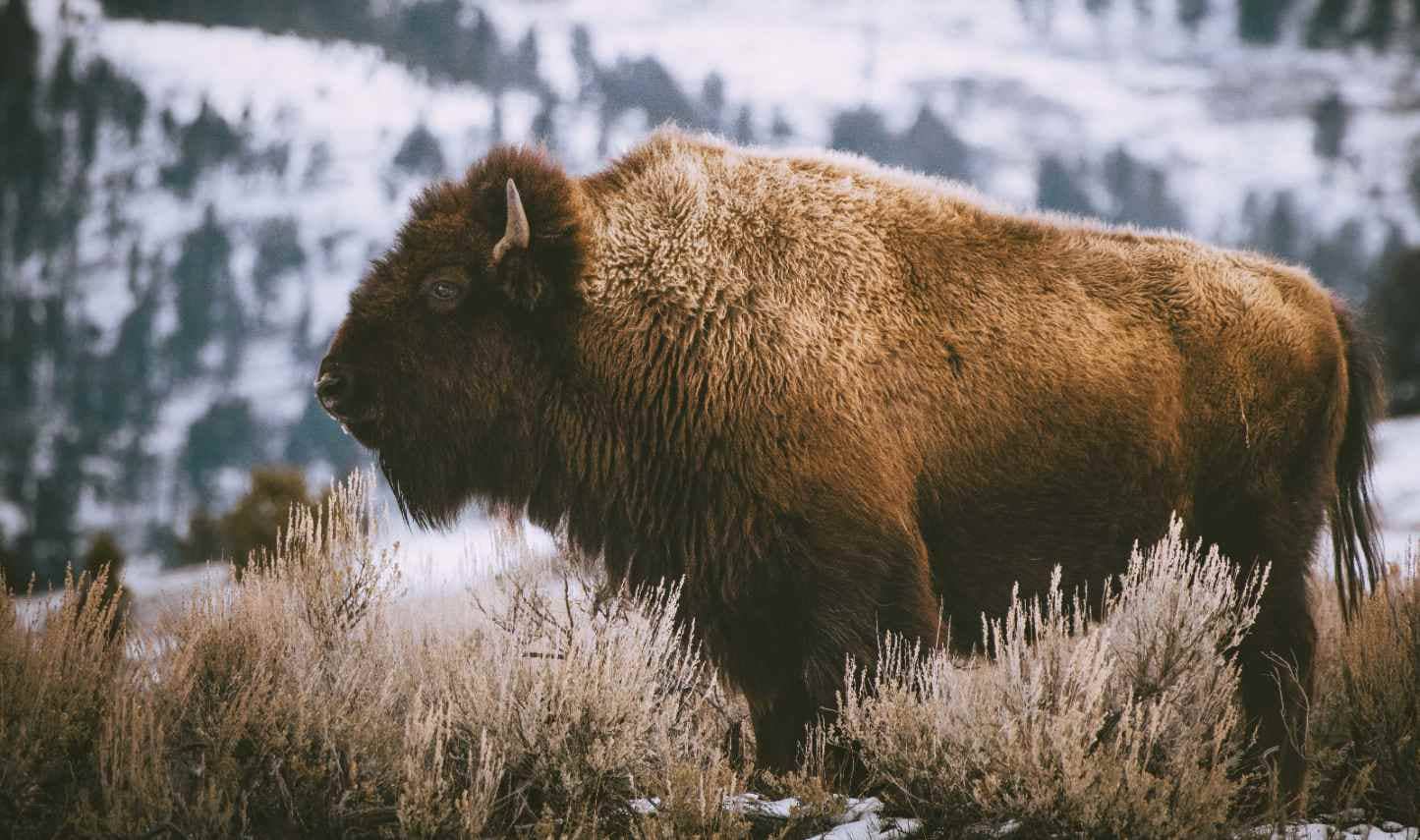
Bison are Renewing Yellowstone’s Landscape
Once, massive herds of Bison roamed the American landscape. These large herbivores played a vital role in the country’s ecosystem. Now, with the return of these majestic animals to places like Yellowstone National Park, scientists and ecologists can finally see with their own eyes just how essential they are.
A study published in Science by researchers from Washington and Lee University in Virginia, has quantified the changes a free-roaming herd of Bison have rendered on the landscape of Yellowstone National Park over the course of seven years — from 2015 to 2022.
Massive Bison Herds
The NYT reports, herds of Bison once dominated the American landscape, from the Great Basin of Nevada to the Atlantic. Oral histories from the Lakota tribe transmit that the herds were so large, they took numerous days to pass the tribe by. However, by the 19th century bison were nearly extinct, and only small herds remained.
Now, 5,000 of the extant 400,000 bison in America live and roam in Yellowstone National Park. This made it a great testing ground for trying to understand the role these massive herds once played in the American ecosystem.
“People look to Yellowstone and the research that comes out of Yellowstone to be some of the most comprehensive understanding that we have of a site,” Dr. Sally Koerner, an associate professor and director of undergraduate studies at the University of North Carolina in Greensboro, told NYT.
From the Valley to the Heights
In order to get a comprehensive overview of what the addition of bison was doing to the landscape of the park. The researchers took monthly soil samples from 16 locations throughout the park — from the valleys to the height, and from where the bison grazed, and where they were excluded from grazing.
What they found was that wherever the bison roamed, the soil was more microbiologically diverse, and the rate of decomposition was improving, reports Positive.News, and there was an uptick in nitrogen in the soil, which is vital for plant growth. Essentially, bison make the soil healthier, create a wide range of different habitats within the park, and help improve the nutrition for other herbivores in the park.
“It truly is a reawakening of what had been there in the past,” lead researcher Bill Hamilton, an ecologist at Washington and Lee University, told Positive News. He added that Yellowstone grasslands are now “functioning better than in their [the bison] absence”, offering “a glimpse of what was lost” when bison were nearly wiped out in the 19th century.
In light of the study, policymakers, in cooperation with tribal trusts, are looking for ways to expand the range in which the bison have to roam. They are considering allowing the bison to roam throughout a larger, linked network of landscapes, which would give them more room, but also allow various different herds to intermingle, thus enhancing the genetic diversity within the bison population.
In some ways, the study in Science is a glimpse into the past, but it could also be a glimpse into the future. If the American bison population manages to recover, it could truly change the American landscape — making it healthier, more diverse, and better for all its inhabitants.