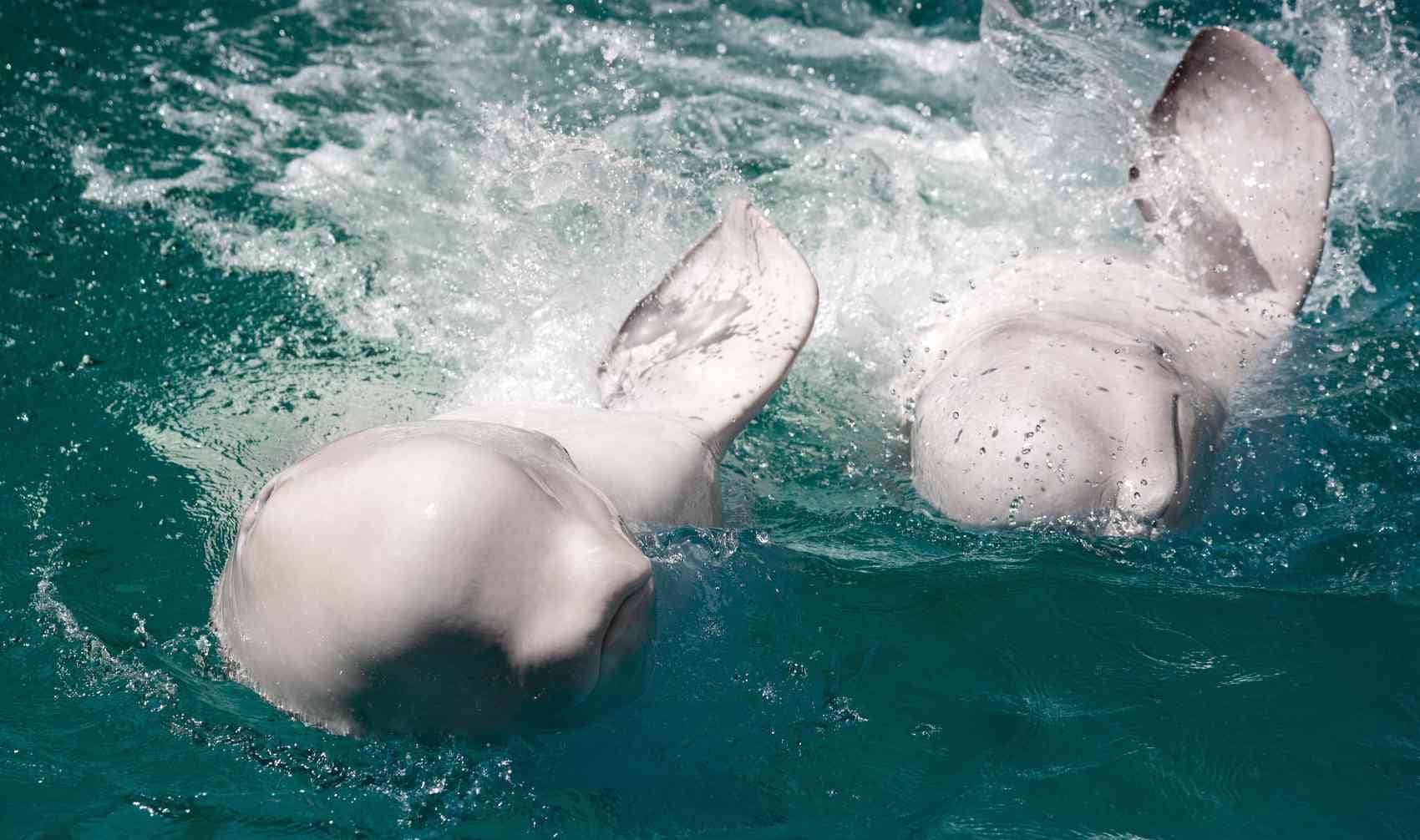
Rescued Beluga Whales Receive New Homes
Sea animal theme parks – once popular with tourists and children’s outings – are in rapid decline thanks to a growing concern for the welfare of these graceful creatures held in captivity. As parks close, these animals need to be relocated.
Sadly, closing the parks puts the sea animals at risk with no one to feed and care for them. The most recent closure has been Marineland in Canada, which shuttered in 2024, reported CBS News. But thanks to an international rescue mission, Marineland’s 30 beluga whales are already heading for their new homes.
Beluga whales are known as the “canaries of the sea,” and the beluga’s musical vocalizations can often be heard above water and even through the hulls of boats. According to National Geographic, adult belugas are also called white whales, which makes them easy to spot. They are the smallest mammals in the whale class, ranging from 13 to 20 feet in length. They have rounded foreheads and no dorsal fin.
Belugas generally live together in small groups known as pods. The vocalizations reflect their sociability. They use a diversified language of clicks, whistles, and clangs to communicate with one another. Belugas can also mimic a variety of other sounds.
Frankie and Bertie Botts Start Their Journey
In 2025, Marineland told CBS that it lacked the resources to continue caring for the large mammals and would have no choice but to euthanize them without a relocation plan or additional funding. After determining that no other facilities in Canada could provide proper care, The National Oceanic and Atmospheric Administration issued relocation approvals.
Two male whales, Frankie and Bertie Botts, completed the nearly 2,000-mile journey from Niagara Falls to San Antonio during the first relocation in July 2026, according to CBS News. Four other whales from that transport went to the Shedd Aquarium in Chicago. The trip required specialized, water-filled transport units and rides on flatbed trucks and a cargo plane.
Frankie and Bertie Botts are adjusting well, report their SeaWorld caretakers and are slowly being introduced to the existing whales at the park.
The Second Stage
The second transport included seven female whales– Xena, Gemini, Skyla, Meeka, Eve, Neva and Calypso –and marked the largest beluga transfer ever completed in the US.
“We are so happy that all went well and the second transport of this huge rescue effort is complete,” Steve Aibel, SeaWorld San Antonio’s vice president of zoological operations, told CBS. “The female contingent is acclimating to their new home in a private habitat away from public view. Caretakers are monitoring their health and behavior.
“They are receiving veterinary care, nutrition and attention as they acclimate to their new environment,” Aibel added. He was among the caretakers who joined the more than 1,200-pound animals on their journey from Marineland.
The remaining 17 belugas will make their way to their new homes in Atlanta, Chicago and Spain over the coming months. The international rescue provides a happy ending for a special group of whales.