Scientists Discovered a New Shark That ‘Walks’
The oceans are full of surprises. From unexplored trenches to coral reefs bursting with color and life, the high seas contain so much yet to be discovered.
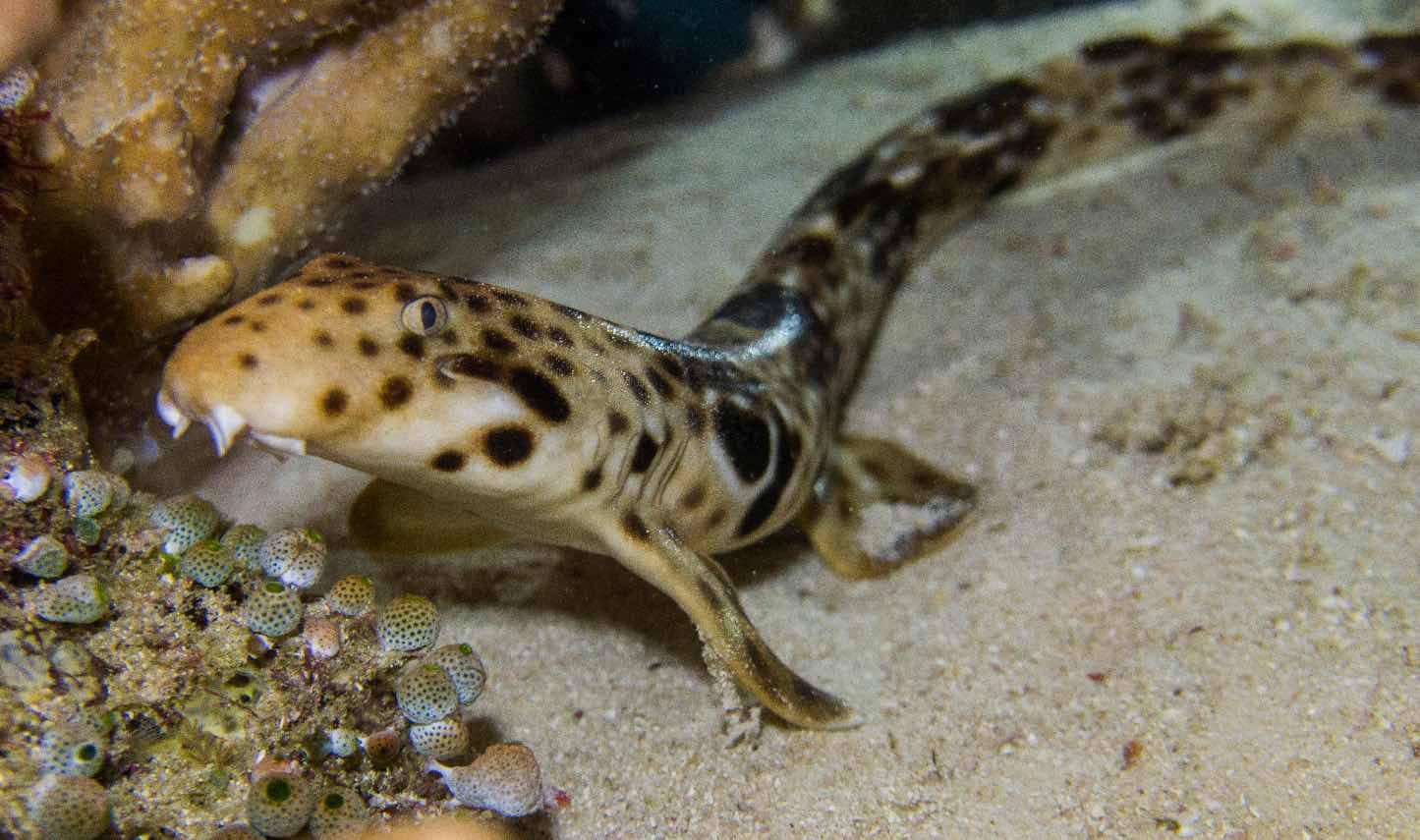
One of the latest finds is a brown-spotted carpet shark discovered near coral reefs off southeastern Papua New Guinea, Live Science reports. This shark, like others in its genus, has a surprising ability to “walk” across the bottom of shallow reefs using its fins as “legs.” The newly discovered species, Hemiscyllium dudgeonae or Dudgeon’s walking shark, was named after the scientist who discovered it.
View this post on Instagram
What are Walking Sharks?
Walking sharks are a rare subset of carpet sharks. As their name implies, walking sharks navigate shallow reefs they inhabit both by swimming and by “walking” across the seafloor using their pectoral and pelvic fins. They use this ability to survive and hunt prey during low tide when water and oxygen levels drop.
Although Papua New Guinean locals have nicknamed walking sharks kadedekedewa, or “lazy shark,” because they “walk” in a slow and slothlike manner, these harmless fish actually have a remarkable adaptation that allows them to live in low-oxygen tide pools, according to Vice. They can lower their heart rate and reduce blood flow, allowing them to survive on less oxygen for hours.
These adaptations help walking sharks thrive in coastal coral reefs. However, due to the limited habitat of walking sharks, they are more vulnerable to climate change, fishing, coral bleaching, and habitat degradation.
Dudgeon’s Walking Shark
Christine Dudgeon had been in the process of searching for Michael’s walking shark when she chanced upon a new shark species during a nighttime expedition, Live Science shares.
Dudgeon spent two decades studying walking sharks and the goal of this expedition had initially been to find the known species, Michael’s walking shark. Dudgeon spotted what she thought was a Michael’s walking shark in the water and hauled it aboard the research vessel.
“I was so excited. … I didn’t look very closely at the pattern, and quickly caught it and took it back to the boat,” Dudgeon tells Live Science.
On board the ship, Dudgeon handed the sample to colleague Jess Blakeway, who realized that instead of the leopard-print characteristic of Michael’s walking shark, this fish featured white dashes and brown dots. After spotting the difference, the team still wasn’t sure “if this was an anomaly or a true difference,” Dudgeon explained.
Over the next two days, the team worked to uncover the mystery of the new shark. They were able to find 11 additional sharks with the same distinctive body pattern. Next, they used DNA testing to confirm that these unique sharks belonged to a never-before-discovered species.
The Oceans Continue to Surprise
Dudgeon’s team plans to continue exploring Papua New Guinea’s reefs. She explained that the finding sheds light on sea life waiting to be discovered.
“This discovery is exciting because a lot of new fishes, and in particular, new shark and ray species, tend to be deep sea, so finding something in very shallow [less than 3 feet, or 1 meter] of water is unusual and highlights that there is potentially a lot of biodiversity that we really don’t know about,” Dudgeon says.
The sea still has plenty of secrets to share. As scientists continue exploring, there’s no telling what incredible discovery will surface next.