The Rise and Rise of Macroalgae Seaweed in Brazil
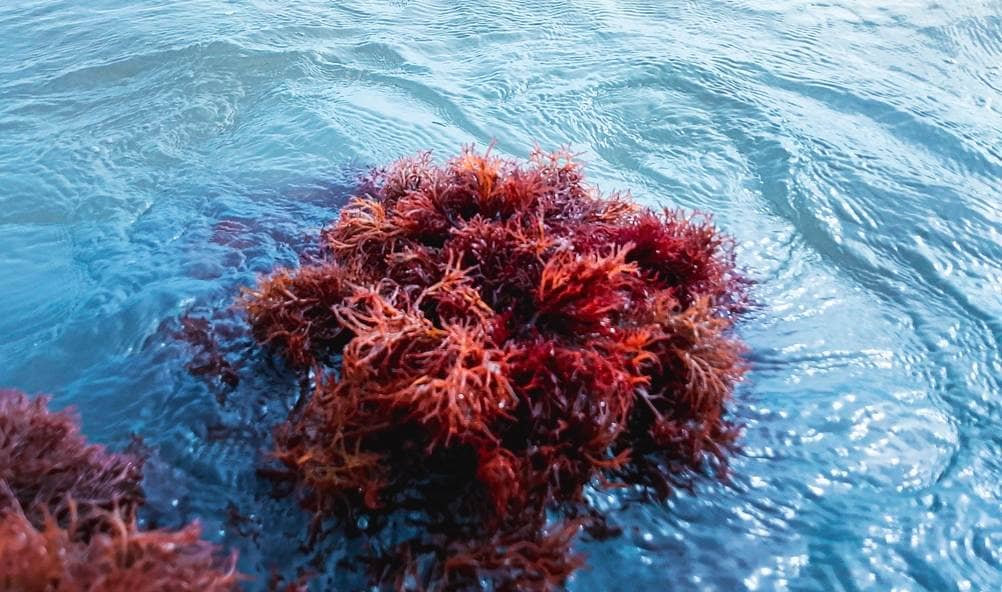
Elkhorn sea moss — kappaphycus alvarezii — is a fast-growing red tropical seaweed native to the Philippines. It was first introduced to Brazil at the end of the twentieth century as a source of carrageenan. This is a natural gelling agent widely used in food products.
Less than three decades later, Brazil’s annual production has reached approximately 1,000 metric tons, Mongabay reports. Cultivation is currently permitted by Brazil’s environmental protection agency, IBAMA, in three neighboring southern coastal states: Santa Catarina, Rio de Janeiro and Sao Paulo.
The Green Potential Of This Red Seaweed Variety
Valéria Cress Gelli, a researcher at Sao Paulo’s Fisheries Institute, emphasizes to Mongabay that the primary value of this seaweed is environmental, even as it delivers significant social and economic benefits. The sea moss produces oxygen and absorbs phosphorus and nitrogen, improving water quality. As it grows, it also captures carbon dioxide from the atmosphere, contributing to efforts to mitigate global warming.
In Brazil, this seaweed is used primarily in biorefineries, where its extracts are processed into biofertilizers that can boost crop yields. Applications have produced yield increases of up to 57 percent in soybeans and 61 percent in tomatoes.
Brazil is also exploring its potential as a source of biofuel, a fuel derived from organic matter, as the US Energy Information Administration explains. Seaweed is increasingly regarded as a promising next-generation feedstock for renewable energy because it grows rapidly without freshwater, synthetic fertilizers, or arable land. Cultivated in the ocean, it can produce biomass without competing with food crops or contributing to deforestation — key advantages over terrestrial biofuel crops such as corn and palm oil.
Sustainable aquaculture company Hatch Blue has described Brazil’s emergence as a red seaweed revolution. Unlike many Asian markets, where seaweed is primarily cultivated for drying, Brazil is developing a higher-value crop that is increasingly integrated with the country’s agricultural sector.
Brazil’s ambitions extend beyond domestic production. At the 2025 United Nations Climate Change Conference in Belem, northern Brazil, the Ministry of Fisheries and Aquaculture announced that the country would join the UN’s Global Seaweed Coalition, supporting sustainable production, local producers, and international collaboration in science, trade and innovation. This momentum continued with the launch of Brazil’s National Plan for the Sustainable Development of Aquaculture in June 2026.
Meanwhile, the Agricultura BR Network was set up in early 2026 to bolster Brazil’s emerging seaweed supply chain. Coordinated by the Brazilian Agricultural Research Corporation, the technical-scientific alliance bringing together researchers, educators, and public-sector organizations to advance the cultivation, processing, and commercialization of macroalgae in Brazil.
An Appetizing and Healthy Dish in Santa Catarina
As Mongabay highlights, kappaphycus alvarezii was first introduced to Brazil in the late 1990s as a source of carrageenan, a natural thickening agent widely used in products such as plant-based milks, ice cream, and yogurt
In Santa Catarina, now Brazil’s largest macroalgae producing state, this seaweed is already making its way onto the dinner table. Tatiana da Gama, a seaweed farmer and owner of Algama Marine Farm, is helping pioneer its culinary potential. Although just one percent of her harvest is designed for food, she already creates an array of sweet and salty seaweed-based delicacies for events, including bread, and chocolate mousse.
Gelli also highlights kappaphycus alvarezii as a promising functional food. Healthline explains that functional foods are natural or fortified foods that offer benefits beyond basic nutrition, potentially supporting overall well-being, or reducing the risk of disease.
According to Health there are real health benefits from eating red seaweed include antioxidant, anti-inflammatory, anti-fungal, and metabolic-regulating properties. These benefits complement an impressive nutritional profile that includes essential minerals, amino acids, and a rich vitamin B and C content.
A Gastronomic Seaweed Hub on the Southern Coast of Rio de Janeiro
Aparecida Rosa Ayres grew up surrounded by seaweed on the beaches of Southeast Brazil. Mongabay reports that even her mother used it to make hair for dolls. Today, Ayres has transformed that childhood familiarity into a thriving culinary adventure, making seaweed the star ingredient at Rancho Ayres, the family restaurant she runs on Sao Goncalo Beach in Paraty, Rio De Janeiro.
The seaweed she cooks with, however, is not the native variety she knew as a child. Instead, she uses kappaphycus alvarezii, the same macroalgae championed by researcher Gelli for its nutritional, environmental, and economic potential.
Ayres’s passion for seaweed gastronomy was sparked by a course offered by the Federal University of Rio de Janeiro, in partnership with the municipal government of Paraty, exploring the potential of seaweed farming to contribute to the region’s bioeconomy.
View this post on Instagram
Coming from a family rooted in the region’s marine territory, Ayres witnessed how the construction of major highways from the late 1960s onward displaced traditional coastal communities. She views her work with seaweed as an act of “resistance and permanence” — a way of maintaining her family’s connection to the sea while creating new economic opportunities.
Gender equality is another important part of her vision. Ayres deliberately seeks to bring more women into mariculture, an industry that has traditionally been dominated by men.
Today, her family cultivates kappaphycus alvarezii, while incorporating it into an increasingly inventive menu. Dishes include seaweed tempura, brownies, and fruit-based drinks. Ayres’s personal favorite is seaweed gel, a versatile ingredient that features prominently in many of her recipes.
But the Ayres family’s relationship with seaweed extends well beyond cultivation and the kitchen. The intrepid entrepreneur also offers educational tourism experiences showcasing the many uses of seaweed, while emphasizing the importance of responsible cultivation and environmental management. Visitors can even experience a thalassotherapy massage using seaweed-based cosmetics — turning the humble marine plant into an experience that encompasses food, culture, wellness, and tourism.