Try a Lymphatic Drainage Massage at Home for a Relaxing Reset
There’s something special about turning your own home into a peaceful retreat. Lighting candles, playing soothing music, and burning incense can do wonders when it comes to calming down. Add a massage to the mix, and you have the perfect recipe for a spa-like reset.
While lymphatic drainage was once only possible at a spa, you can now try this wellness trend at home, according to Elle. The gentle massage technique involves stimulating the movement of lymphatic fluid beneath the skin to support circulation and the body’s natural detoxification process.
The Benefits of a Lymphatic Drainage Massage
The lymphatic system, unlike the circulatory system, doesn’t have its own pump, Shirlei Silva, a licensed massage therapist, tells Elle. “It relies on movement, breathing, and manual stimulation to keep things flowing,” she adds.
The massage uses light, rhythmic movements and may support people experiencing bloating, fluid retention, inflammation, and swelling. The massage may help calm the nervous system, reduce stress, support better sleep, boost immune function, aid digestion, and ease chronic pain, according to Vogue Arabia.
How to do a Lymphatic Drainage Massage at Home
The first step in giving yourself a lymphatic drainage massage is to start with five slow, deep diaphragmatic breaths. After that, gently stimulate major lymph node areas. You can gently stretch the skin around the neck and collarbone, eight to 10 times, and do it again in the armpits and groin.
Then move on to your legs. You can put your legs up against the wall for five to 10 minutes daily or put on lotion and then glide your hands from your lower legs toward the backs of the knees, continuing upward toward the thighs and groin with long and firm strokes. It’s now time to prioritize the stomach. Begin two fingers away from the belly button, making slow, clockwise circles. “It mirrors the natural path of the digestive system,” Rebecca Faria, a Los Angeles-based lymphatic drainage expert, explains to Vogue Arabia. Then make your way toward the groin.
Your arms need a bit of tender loving care too. Make upward swiping motions with one hand on the opposite arm. Move in the direction of the armpit, where the lymph nodes are located. Lastly, treat your face. Using light pressure, move from the center of the face outward toward the lymph nodes along the neck. You can also move toward the ears, then down the neck to the collarbone. “Using light pressure, perform J-shaped strokes and gentle stretches on the sides of the neck to drain fluid down to the collarbone,” Krisztina Jolsvai, a lymphatic drainage therapist, explains.
Use Tools and Your Hands
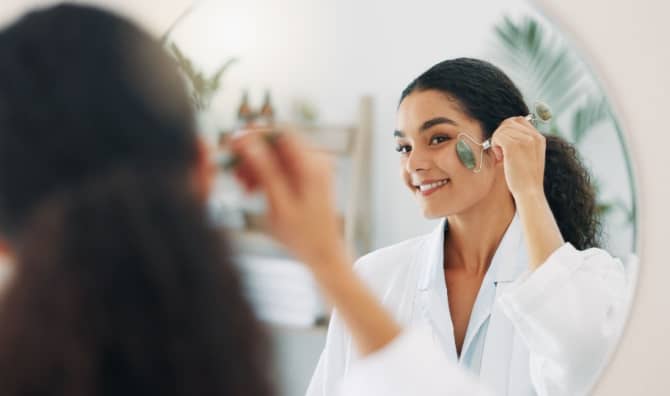
Hands are especially effective because they can respond to areas of tension and fluid buildup while naturally adjusting pressure during the massage. There are also several tools to work with. “Tools are a fun complement to the practice,” Faria says. One popular facial tool is gua sha, which can reduce swelling. Try a facial roller to increase circulation and cool the skin to reduce puffiness. Finally, dry brushing is a good option for improving flow near the skin and supporting the removal of waste. It’s best to use it before taking a shower.
While lymphatic drainage can be beneficial, it requires consistency. It’s also recommended to combine professional sessions with at-home maintenance. According to experts, cases such as post-surgery, lymphedema, or constant, painful swelling require a professionally trained therapist. Medical clearance is also required for individuals with underlying conditions like congestive heart disease, infections, DVT, or kidney issues.
When done correctly, this massage may help support the body’s natural drainage processes while leaving you feeling lighter and more relaxed. With tools and simple steps, you can enjoy this method without ever having to leave the house.