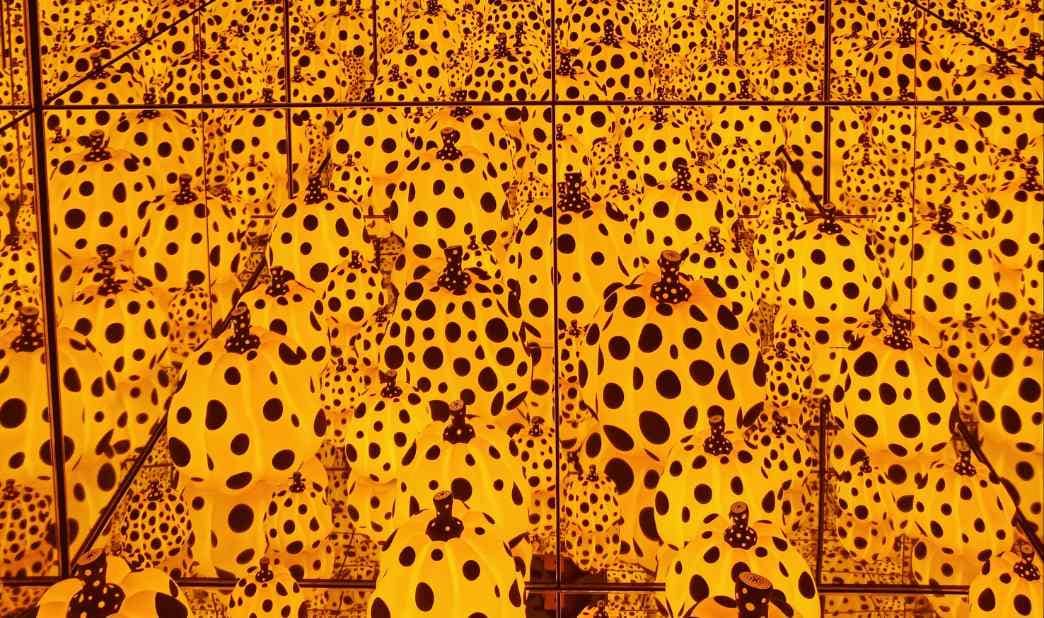
Celebrating the Colorful Life and Legacy of Yayoi Kusama
Japanese artist Yayoi Kusama transformed the world around her into a colorful canvas featuring polka dots. From sculptures and paintings to immersive installations, her bold artwork was internationally renowned. She became one of the country’s most important artists.
Kusama passed away on August 14, 2026, at a hospital in Tokyo at the age of 97, according to AP News. “She continued to paint until her final days, never setting aside her brush, and continued exploration of forever love and eternal soul,” her studio said in a statement. “We will carry forward Kusama’s wishes and, through art, continue to bring hope and strength for the future to people around the world.”
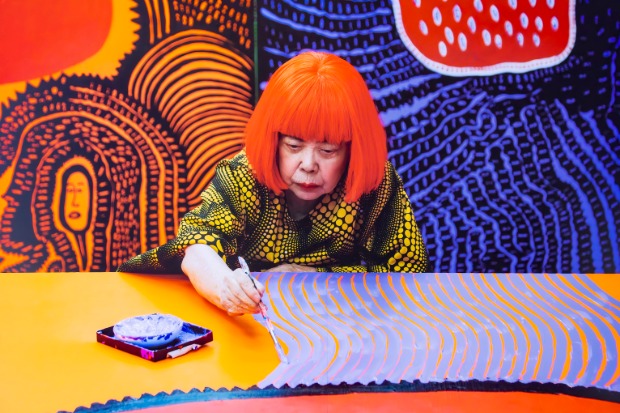
(365 Focus Photography / Shutterstock.com)
Who Was Yayoi Kusama?
Kusama rose to become a highly respected figure in Japan’s contemporary art world, AP News reports. Her art reached audiences around the world, appearing in major institutions including the Museum of Modern Art, the Whitney Museum of American Art in New York, and the Museum Ludwig in Germany.
@cnn Japanese artist Yayoi Kusama, famed for her polka-dot paintings, pumpkin sculptures and “Infinity Mirror Rooms,” was one of the world’s most celebrated and best-selling artists. She passed away earlier this month according to a statement on the artist’s official website. #CNN #News #YayoiKusama ♬ original sound – CNN
What made Kusama unique was her use of repetition. Her works included winding shapes and dots, which appeared across canvases and illuminated installations. She also created giant flower sculptures and mirrored rooms that produced striking illusions of seemingly endless fields of dotted shapes.
An Artist Who Broke Barriers
Kusama traced her style to visual hallucinations she said she experienced from childhood. And while she spent decades in and out of a psychiatric institution, her mental health struggles did not stop her from continuing to create.
In 1957, she became one of the first Japanese women to travel to New York to build an artistic career. Though Kusama endured years of poverty, she remained committed to her artistic vision that would eventually reach the masses. After decades without widespread recognition, Kusama became a global cultural icon in her 80s and 90s, according to the BBC.
@outpump Rest in Peace Yayoi Kusama 🕊️ From her first works in New York in the 1950s to her iconic collaborations with Louis Vuitton, Yayoi Kusama built an artistic universe that became bigger than art itself. Her art will live on forever just like the infinity she spent her life trying to capture. #YayoiKusama #art #artist #contemporaryart #fashion ♬ 原聲 – NoralFlute
Finding Hope Through the Power of Art
Kusama’s exhibitions drew enormous audiences around the globe, and her distinctive creations became popular subjects for photographs, The Conversation reports. However, her life was not without challenges.
Kusama began experiencing hallucinations as a child, and the patterns she saw soon made their way into her artwork. By age 10, she was already using materials including watercolors, pastels, and oils to depict dots and net-like designs she encountered in her visions. She said her childhood was traumatic, and her artistic ambitions were discouraged. Despite that, creating became a source of comfort.
Her mental health later deteriorated while she was living in the US, and after returning to Japan, she eventually admitted herself to a psychiatric hospital in 1977. While living there, she went to her nearby studio each day to continue making art.
Kusama’s life is a testament to the human ability to rise above challenges and turn pain into art. Her art and legacy will continue to live on, inspiring people around the world for years to come.